Setting up a fishing reel for the first time can feel overwhelming. There are so many parts, and the process seems complicated. However, it does not have to be. With the right tools and a little patience, anyone can get a reel ready for the water in under 30 minutes. This guide walks you through every step clearly and simply. Whether you are brand new to the hobby or just need a refresher, you will find everything you need right here.
What Is a Line Spooler and Why Do You Need One?
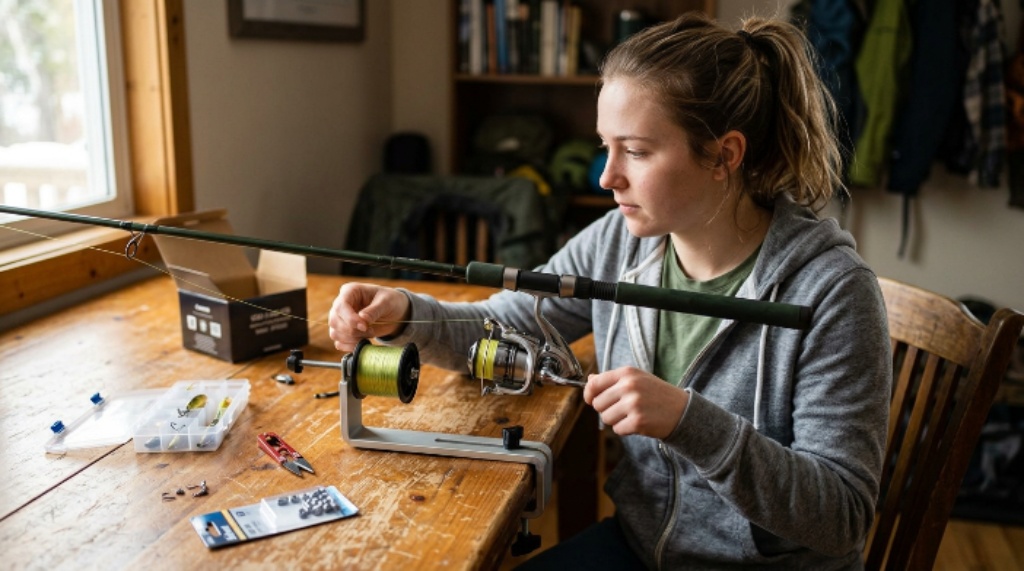
A line spooler is a simple device that holds your fishing line spool steady while you wind the line onto your reel. Without one, the process gets messy fast. The line can twist, tangle, or spool unevenly. These problems cause headaches on the water later.
Additionally, a spooler gives you consistent tension as the line transfers. This results in a smoother, more even fill on your reel. Most spoolers are inexpensive and widely available at fishing tackle shops or online. Some are handheld, while others clamp onto a table or rod. Either type works well for a beginner fishing setup.
Using a spooler is one of the most helpful spooler usage tips any experienced angler will give you. It saves time and prevents the most common line-spooling mistakes.
Gear You Need Before You Start
Before diving into the setup process, gather your equipment. Having everything ready saves time and keeps the process stress-free.
Here is what you will need:
- A fishing reel (spinning or baitcasting)
- A fishing rod matched to your reel
- A spool of fishing line suited to your target fish
- A line spooler
- A small pair of scissors or line cutters
- A pencil or pen (optional, used to hold the line spool manually if needed)
Make sure your line matches the reel’s recommended line weight. This information is usually printed on the side of the reel. Using the wrong line weight can reduce casting distance and damage your equipment over time.
Step One: Attach the Reel to the Rod
Start by sliding the reel into the reel seat on your fishing rod. Tighten the locking rings firmly so the reel does not wobble. However, do not overtighten them, as this can crack the seat or damage the reel foot.
Once the reel is secure, make sure it sits straight. A crooked reel causes uneven line lay. Take a moment to check this before moving forward.
Step Two: Set Up the Line Spooler
Place your fishing line spool onto the spooler. If your spooler clamps to a surface, set it up on a table at a comfortable height. The line should feed off the spool smoothly without resistance.
Position the spooler so the line comes off in the same direction your reel takes it up. For spinning reels, the line should come off the supply spool in the same rotational direction as the reel’s bail. This is one of the most important spooler usage tips to remember. Getting this wrong introduces unwanted line twist from the very beginning.
If you are using a handheld spooler, have a friend hold it or prop it carefully so both hands are free to guide the line.
Step Three: Thread the Line Through the Rod Guides
Open the bail on your spinning reel. Then, thread the line from the spooler through each rod guide, starting from the tip guide and working down toward the reel. Take your time here. Missing a guide means starting over.
Once the line passes through all the guides, bring it to the reel. Thread it through the line clip or tie it directly to the spool using an arbor knot. An arbor knot is simple and holds well. Tie it tightly and trim any excess tag end close to the knot.
Step Four: Close the Bail and Begin Spooling
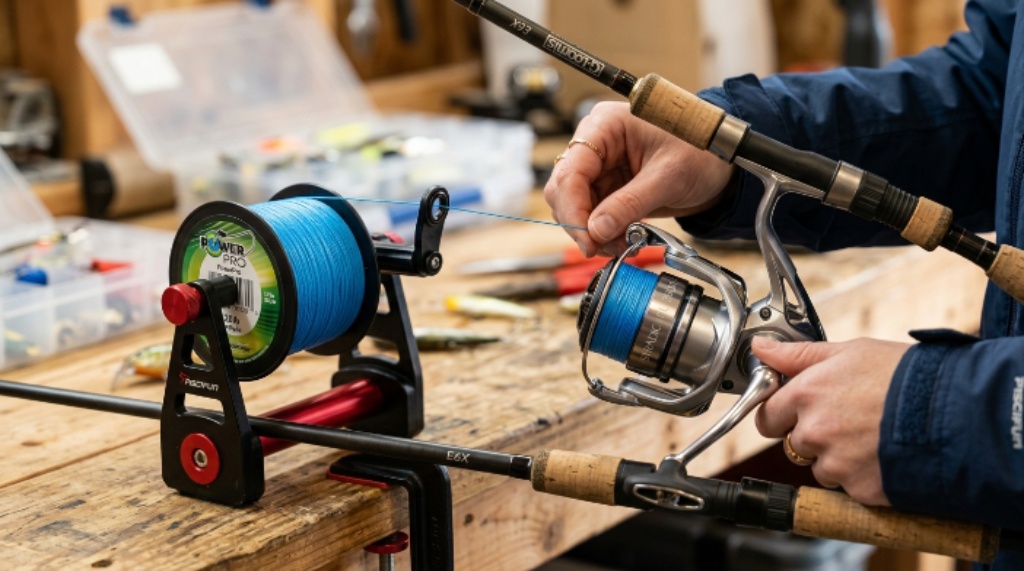
Close the bail on the spinning reel. This engages the mechanism that winds line onto the spool. Hold the rod with one hand and use your index finger to apply light tension to the line as it feeds through.
Start reeling slowly and steadily. The line should lay evenly across the spool. If you notice it bunching on one side, stop and adjust the angle of the rod or your finger position on the line.
Therefore, consistent hand tension is key throughout this step. Uneven tension leads to loose coils that cause tangles during casting. Keep the pressure firm but gentle.
Step Five: Fill the Spool to the Right Level
Most reels have a fill line marked on the spool, or the manufacturer states the correct amount in the reel’s manual. As a general rule, fill the spool to about 1/8 inch below the rim. Overfilling causes the line to spill off during casting. Underfilling reduces casting distance.
Stop frequently to check the fill level. It is easier to add more line than to remove it once you have gone too far.
Step Six: Cut the Line and Secure the End
Once the spool is filled correctly, cut the line from the supply spool. Leave a few inches of extra line so you can tie on a leader, swivel, or lure later. Then, secure the free end using a rubber band, tape, or the reel’s line clip to prevent it from unspooling while you transport your gear.
At this point, your reel is fully set up and ready for the water.
Tips for a Smooth Beginner Fishing Setup
Getting the basics right makes a big difference on the water. Here are a few practical tips to keep in mind as you build your first beginner fishing setup:
- Always match line weight to the reel’s specification.
- Wet the line slightly before spooling. This reduces friction and helps the line lay more smoothly.
- Re-spool your reel at least once a season. Old line loses strength and becomes brittle over time.
- Store your rod and reel out of direct sunlight. UV exposure weakens fishing line quickly.
- Check your knots before every trip. A bad knot loses fish.
Additionally, practice makes perfect. The first time you spool a reel, it might not come out perfectly. That is completely normal. Each time you do it, the process becomes faster and more natural.
Common Mistakes to Avoid
Even experienced anglers make spooling mistakes from time to time. However, knowing what to watch for helps you avoid the most common ones.
Do not skip the spooler. Feeding line off a loose spool held by hand nearly always introduces twist. Use a dedicated spooler every time.
Do not pull the line too tight or too loose while reeling. Both extremes cause problems. Too tight, and the line compresses unevenly. Too loose, and it creates soft spots that lead to tangles.
Also, do not ignore the direction of line lay. Always confirm the line feeds in the correct direction before you start. Fixing twist after the fact takes far more time than preventing it upfront.
Conclusion
Setting up a fishing reel with a line spooler is straightforward once you understand the steps. Start by attaching the reel to the rod. Then set up the spooler, thread the line through the guides, tie it to the spool, and reel it on evenly. Fill the spool to the correct level, cut the line, and you are done.
Following these steps gives you a clean, twist-free setup every time. A proper beginner fishing setup builds confidence on the water from day one. Take your time, use the right tools, and do not rush the process. Fishing is meant to be enjoyable, and a well-prepared reel makes every trip better.
Frequently Asked Questions
Do I really need a line spooler, or can I do it by hand?
You can spool a reel by hand, but using a spooler produces better results. A spooler keeps the supply spool stable and maintains even tension, which reduces line twist. It is a small investment that makes a noticeable difference in performance.
What type of fishing line should a beginner use?
Monofilament line is the best choice for most beginners. It is easy to handle, affordable, and forgiving of minor setup errors. As you gain experience, you can explore braided or fluorocarbon lines for specific situations.
How often should I replace my fishing line?
Replace your line at least once a year if you fish regularly. If you notice the line feels stiff, looks discolored, or has visible weak spots, replace it sooner. Fresh line casts better and holds stronger knots.
How do I know how much line to put on my reel?
Check the reel’s body for the recommended line capacity, which is usually printed there. Fill the spool to about 1/8 inch below the rim. Consult the reel’s manual if you are unsure about the exact amount.
Why does my line keep twisting after I spool it?
Line twist usually happens when the supply spool feeds in the wrong rotational direction relative to the reel. Make sure the line comes off the supply spool in the same direction the reel winds it on. Using a spooler and maintaining steady tension also helps prevent this issue.
Related Topics:
Goose Feather Pillows vs Goose Down: Which Should You Choose?
How to Select Lightweight Cart Golf Bags for Comfortable Play