A slice is one of the most frustrating problems in golf. The ball starts on a promising line, then curves sharply to the right for right-handed players. It costs you distance, accuracy, and confidence. Many golfers spend years trying to fix their slice through swing changes alone. However, there is another tool worth considering: the golf ball itself.
Low spin golf balls can make a real difference when you are fighting a slice. They do not fix the root cause of the problem overnight, but they can help you hit straighter shots while you work on your swing. Understanding why this works and how to use it to your advantage is the first step toward playing better golf.
Why Golfers Slice the Ball
Before looking at solutions, it helps to understand the problem. A slice happens when the clubface is open relative to the swing path at the moment of impact. This creates sidespin on the ball. The ball curves in the direction the face is pointing, which for most right-handed golfers means a curve to the right.
The more sidespin you put on the ball, the more it curves. A small face-to-path gap creates a gentle fade. A large gap creates a dramatic slice that flies well off target. Therefore, reducing that sidespin is the key to straighter shots.
Swing fixes like adjusting your grip, improving your takeaway, and squaring your clubface at impact are all effective long-term solutions. However, they take time and practice to build into muscle memory. In the meantime, choosing the right ball can soften the damage and help you enjoy your rounds more.
What Makes a Golf Ball Low Spin
Not all golf balls behave the same way. The amount of spin a ball generates depends on its construction, its compression rating, and the materials used in its cover and core.
Low spin golf balls are designed to reduce sidespin and backspin across all shots. They typically feature a firm core that limits spin on full shots. Additionally, they use a harder outer cover, often made from Surlyn, which produces less friction with the clubface. Less friction means less spin transferred to the ball at impact.
Two-piece construction is common in low spin options. The simple design of a large core wrapped in a durable cover keeps spin rates down while maximizing energy transfer for distance. This combination makes these balls particularly useful for golfers who struggle with a slice.
How Low Spin Balls Help Reduce a Slice
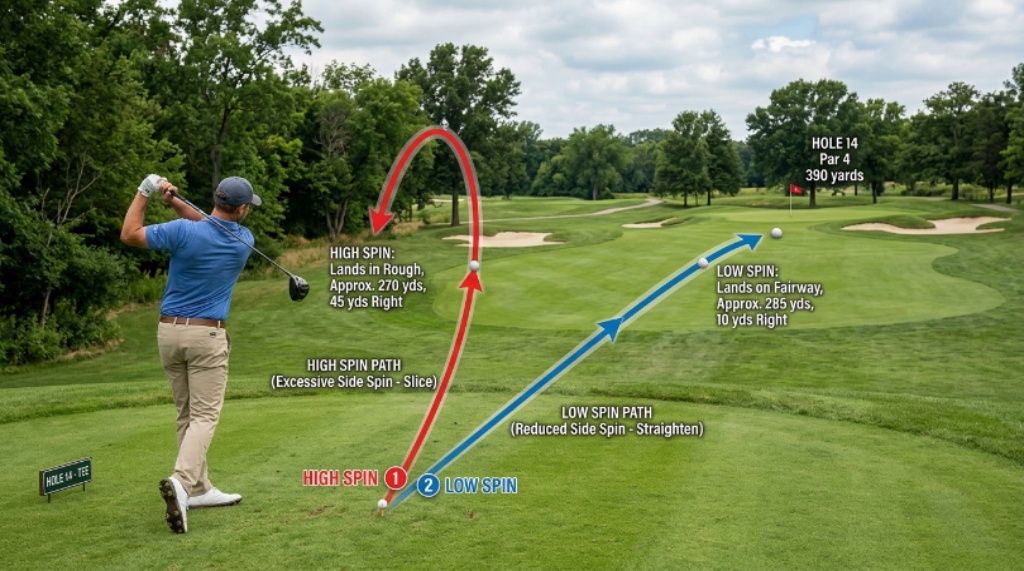
When a ball spins less, it curves less. This is the core principle behind using a reduce slice golf ball approach. The sidespin that causes your slice is still there, but the ball resists the curve better than a high-spin option would.
Think of it this way. A high-spin ball amplifies whatever is happening at impact. If your clubface is slightly open, the ball curves noticeably. If it is very open, the ball curves dramatically. A low spin ball, however, reacts less aggressively to the same mistakes. The result is a shot that still drifts slightly but stays much closer to your target line.
Additionally, low spin balls tend to launch on a lower, more penetrating trajectory. This reduces the time the ball spends in the air being influenced by sidespin. Therefore, even if the spin is present, it has less time to take effect before the ball lands.
Straight Flight Balls: What to Look For in 2026
The market for straight flight balls has grown significantly in recent years. Many manufacturers now offer options specifically engineered to minimize sidespin and promote a straighter ball flight. Knowing what to look for helps you pick the right one.
Compression Rating
Compression is a measure of how much the ball deforms when struck. Low-compression balls are softer and easier to compress. They are generally better for slower swing speeds. High-compression balls are firmer and suit faster swingers.
For most recreational golfers who slice, a mid to low compression ball offers the best combination of straight flight and feel. Look for compression ratings between 50 and 80 if you are a moderate swinger.
Core Design
A large, firm core reduces spin effectively. Some balls feature a gradient density core, which means the center is firmer than the outer portion. This design helps control spin on full shots while still providing reasonable feel on shorter ones.
Cover Material
Surlyn covers are the top choice for low spin performance. They are harder than urethane and generate less grip between the ball and the clubface. However, this does mean a slight reduction in short game feel compared to premium urethane-covered balls.
If you are focused on fixing your slice first and everything else second, a Surlyn-covered ball is the practical starting point.
Pairing a Low Spin Ball with Simple Swing Adjustments
Using the right ball is helpful, but it works best when combined with basic swing corrections. You do not need a complete overhaul. A few small changes can produce noticeable improvements quickly.
Check Your Grip
A weak grip is one of the most common causes of a slice. If your hands are rotated too far to the left on the grip, the face tends to stay open through impact. Rotate both hands slightly to the right so that you can see two or three knuckles on your left hand at address. This small change encourages the face to square up at impact.
Adjust Your Stance and Alignment
Many slicers aim left to compensate for the curve of their shots. This actually makes the problem worse. Aiming left promotes an outside-to-inside swing path, which creates even more sidespin. Therefore, commit to aligning your feet, hips, and shoulders parallel to your target line and trust the ball to fly straighter.
Focus on Swing Path
A simple drill is to imagine swinging the club out toward right field rather than pulling it across your body. This promotes an inside-to-out swing path, which is the natural enemy of a slice. Combine this path thought with a low spin ball, and you will start to see dramatically different results.
When Low Spin Balls Are Not Enough
Low spin balls help, but they are not a permanent fix on their own. If your slice is severe, the ball can only do so much. Additionally, low spin balls sacrifice some short game performance. Around the greens, they do not stop as quickly and may feel harder than you prefer.
Therefore, the best approach is to use a low spin ball as a bridge. It gives you more playable shots while you work on the swing changes that will eventually solve the problem at its source. Once your ball flight becomes more consistent and your slice has reduced, you can graduate to a more versatile ball that offers better all-round performance.
It is also worth considering a professional lesson. A qualified instructor can identify the specific cause of your slice in a matter of minutes. Pairing that insight with the right equipment gives you the fastest possible path to improvement.
Choosing the Right Ball for Your Swing Speed
Swing speed affects how much benefit you get from a low spin ball. Golfers with slower swing speeds already generate less spin naturally. For them, a very low spin ball might actually reduce distance without offering much extra straightness.
If your driver swing speed is below 80 mph, focus on a soft, low-compression ball that maximizes distance. A moderate spin reduction is enough. If your swing speed is between 80 and 100 mph, a firm two-piece low spin ball is likely your best match. For those swinging above 100 mph, a firmer low spin option will handle the higher impact forces and still deliver the sidespin reduction you need.
Conclusion
Fixing a slice is a journey, but you do not have to make that journey alone or without tools. Low spin golf balls offer a practical, immediate way to see straighter ball flights while you work on the underlying swing issues. By choosing straight flight balls with the right compression and cover material, you reduce the impact of sidespin and start enjoying more predictable shots.
Pair your ball choice with simple grip and alignment adjustments, and the results will come faster than you expect. Remember, the goal is progress, not perfection. The right ball, combined with smart practice, puts you on the shortest path from a frustrating slice to a confident, controlled ball flight.
Frequently Asked Questions
Do low spin golf balls actually fix a slice?
They do not fix a slice entirely, but they reduce it noticeably. By generating less sidespin, low spin balls curve less on off-centre or open-face shots. They are most effective when used alongside basic swing improvements.
What is the best low spin golf ball for beginners?
Beginners do well with two-piece, Surlyn-covered balls with a mid to low compression rating. These options are affordable, durable, and forgiving. They minimize the effects of poor contact and open clubface angles.
Will a low spin ball reduce my distance?
Not necessarily. For most recreational golfers, low spin balls actually increase distance because they reduce the sidespin that causes the ball to curve and lose forward momentum. The straighter the flight, the more carry and roll you typically get.
Can I use a low spin ball for my short game?
You can, but there is a trade-off. Low spin balls with Surlyn covers do not generate as much spin around the greens. They may not stop as quickly on approach shots or chip shots. However, for golfers prioritizing a straighter tee shot, this is a worthwhile compromise during the improvement phase.
How long does it take to see results from switching to a low spin ball?
Most golfers notice a difference within a round or two. The ball reacts less dramatically to an open face, so shots stay closer to the target line almost immediately. Long-term improvement still depends on swing corrections, but the ball change provides fast, visible progress.
Related Topics:
How to Select Lightweight Cart Golf Bags for Comfortable Play
How to Choose the Right Crossbody Bag: A Complete Buying Guide