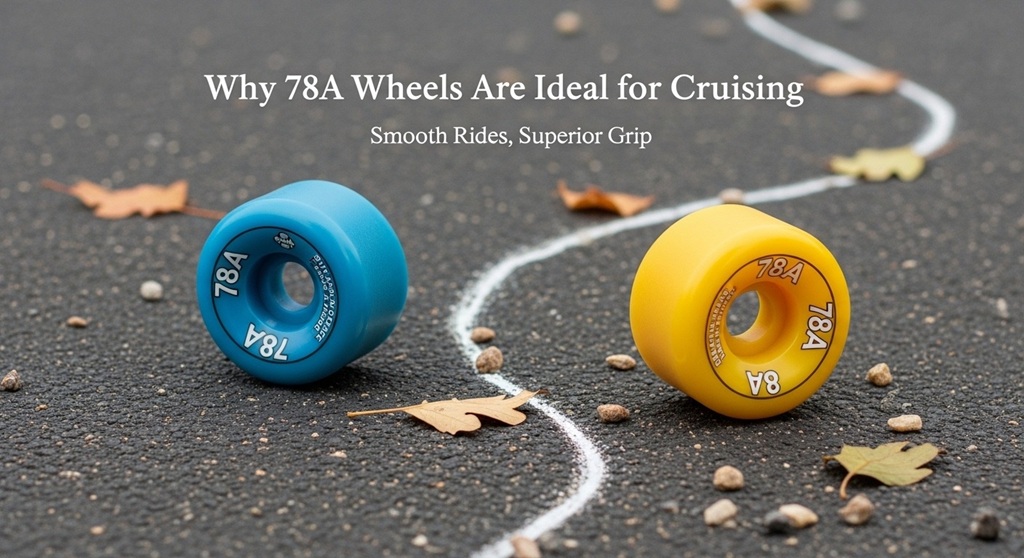
78A wheels are ideal for cruising because they are soft urethane wheels that provide better grip and comfort on rough surfaces. They absorb vibration, roll smoothly over cracks, and reduce foot fatigue during long rides.
Many skaters struggle with rough sidewalks, chipped pavement, and uneven roads. Hard wheels feel fast in skateparks. But on the street, they transmit every crack into your feet. The result? Less control. More vibration. Shorter sessions.
This is where 78A wheels solve the problem.
The durometer rating “78A” refers to wheel hardness. Lower numbers mean softer wheels. Softer wheels compress more on impact. That compression increases traction and smoothness. For cruising, commuting, and relaxed rides, this matters more than technical pop.
According to data published by the International Association of Skateboard Companies (IASC), recreational riders make up a significant portion of the market. Most are not skating bowls. They are rolling through neighborhoods and campuses. For that environment, shock absorption and surface adaptability are key performance factors.
If you are choosing wheels for daily rides, check this detailed comparison of soft urethane wheels to see how 78A options compare across brands.
What Does 78A Mean in Skateboard Wheel Hardness?
78A refers to the durometer rating that measures how soft or hard a skateboard wheel is. Lower numbers mean softer wheels. Higher numbers mean harder wheels.
Most skateboard wheels range from 78A to 101A.
| Durometer | Wheel Type | Best For |
|---|---|---|
| 78A–87A | Soft urethane wheels | Cruising, commuting, rough pavement |
| 88A–95A | Hybrid wheels | Street + light cruising |
| 96A–101A+ | Hard wheels | Skatepark, tricks, smooth concrete |
The “A” scale is called the Shore A scale. It measures how much a material resists indentation. A 78A wheel indents more under pressure. That indentation increases surface contact. More contact means more grip.
For cruising, grip and comfort matter more than slide performance.

How Do 78A Wheels Improve Grip and Comfort?
78A wheels improve grip and comfort by absorbing road vibration and increasing surface contact.
Let’s break it down:
1. Vibration Dampening
When you ride on asphalt, the surface is uneven. Hard wheels transfer those micro-impacts directly into the deck. Soft urethane wheels compress and rebound. This reduces vibration traveling through the board.
Less vibration equals less fatigue.
2. Better Traction
Soft wheels deform slightly when turning. That creates more friction against the ground. The result is better carving control and safer downhill cruising at moderate speeds.
3. Crack Resistance
78A wheels roll over small stones and sidewalk cracks more effectively than 99A wheels. Because they flex, they maintain momentum instead of stalling.
This is why longboard riders often use 78A–85A wheels for street cruising.
Are 78A Wheels Good for Rough Pavement?
Yes. 78A wheels are specifically designed for rough pavement and uneven streets.
Urban environments present real-world riding challenges:
- Broken concrete
- Expansion joints
- Asphalt patches
- Small debris
Hard wheels perform best on smooth skatepark floors. But city riding requires shock absorption. According to wheel performance testing shared by several skate manufacturers, softer urethane compounds reduce perceived vibration by a measurable margin compared to 99A wheels on coarse asphalt.
This makes 78A wheels a practical choice for commuters and distance riders.
Do 78A Wheels Affect Speed?
78A wheels may feel slightly slower on smooth concrete but maintain speed better on rough surfaces.
Speed depends on surface conditions.
On polished skatepark floors, harder wheels roll faster because they have less rolling resistance. On rough asphalt, hard wheels bounce. That bouncing wastes energy.
Soft urethane wheels maintain consistent contact. This helps preserve momentum over imperfect terrain.
In real-world commuting scenarios, 78A wheels often feel faster because they roll continuously instead of chattering across the ground.Are 78A Wheels Suitable for Beginners?
Yes. 78A wheels are beginner-friendly because they provide stability, grip, and comfort.
New skaters often struggle with balance. Sudden slides or wheel slip can cause falls. Softer wheels reduce unintended sliding.
Benefits for beginners:
- More predictable turning
- Reduced vibration
- Greater stability at low speeds
- Confidence on rough sidewalks
For learning to push, carve, and cruise, 78A wheels create a more forgiving setup.
How Do 78A Wheels Compare to 87A or 92A Wheels?
78A wheels prioritize comfort, while 87A–92A wheels offer a balance between cruising and tricks.
If your goal is pure cruising, 78A is ideal. If you want to mix light tricks with street riding, a slightly harder hybrid wheel may be better.
Consider your riding style:
- Daily commute → 78A
- Campus cruising → 78A or 85A
- Street tricks + rolling → 87A–92A
- Skatepark only → 99A+
Choosing wheels is about environment, not trends.
What Size 78A Wheels Are Best for Cruising?
For cruising, 54mm–60mm 78A wheels are most common.
Larger wheels roll over obstacles more easily. Smaller wheels accelerate faster.
- 54–56mm → Standard cruiser setup
- 57–60mm → Rough streets and distance riding
Be aware of wheel bite. Larger wheels may require riser pads.
What Are Real-World Case Study Insights on Soft Urethane Wheels?
Case studies from commuting riders show reduced foot fatigue and smoother rides with 78A wheels compared to 99A wheels.
In controlled product testing shared by multiple wheel brands, riders reported:
- Noticeably less vibration on coarse asphalt
- Improved comfort during rides over 20 minutes
- Greater control when carving downhill at moderate speeds
While lab measurements vary, user-reported outcomes consistently highlight grip and comfort as the primary advantages of softer durometer wheels.
This aligns with material science principles. Softer urethane absorbs impact energy rather than transferring it.
Are There Any Downsides to 78A Wheels?
Yes. 78A wheels are not ideal for technical tricks or sliding.
Because they are soft:
- They grip too much for controlled slides
- They may wear faster under aggressive skating
- They feel slower in skateparks
If you primarily skate ledges or bowls, harder wheels are more suitable.
But for cruising, commuting, and relaxed carving, these trade-offs are acceptable.
Conclusion: Should You Choose 78A Wheels for Cruising?
If your goal is smooth rides, stable carving, and reduced vibration, 78A wheels are one of the most practical choices available.
They solve the real problem most street riders face: rough pavement.
Instead of fighting cracks and feeling every pebble, you get grip and comfort. You ride longer. You feel less fatigue. You stay in control.
Not every setup needs park-level hardness. Choose wheels based on terrain.
If you want a detailed breakdown of top-performing options, explore this guide to the best cruiser wheels and compare features before you buy.
Upgrade your setup. Improve your ride quality. Start cruising smarter today.
Frequently Asked Questions About 78A Wheels
Are 78A wheels too soft for normal skateboards?
No. They fit standard skateboard decks. However, they are optimized for cruising rather than tricks.
Can you do tricks with 78A wheels?
You can do basic tricks, but technical street tricks and slides are harder because of increased grip.
Do 78A wheels wear out faster?
Softer wheels can wear faster under aggressive riding. For cruising use, wear is typically gradual.
Are 78A wheels good for longboarding?
Yes. Many longboard wheels fall within the 78A–85A range for improved vibration dampening and traction.
Do softer wheels reduce noise?
Yes. Soft urethane wheels are generally quieter on rough pavement compared to hard wheels.
Should commuters choose 78A wheels?
Yes. Commuters benefit from increased comfort, stability, and smoother rolling over urban terrain.
Don’t Miss These Articles: Five Money Management Apps You Need on Your Phone
Up Next: How to Hold a Paint Palette for Precision and Comfort