Garden ponds bring life and beauty to outdoor spaces. However, protecting them from harsh weather while maintaining adequate sunlight can be challenging. A greenhouse cover offers an excellent solution. This guide will show you how to create the perfect greenhouse structure for your pond without compromising essential light penetration.
Understanding the Sunlight Requirements of Garden Ponds
Garden ponds need sunlight for several important reasons. Plants within the pond rely on light for photosynthesis. Fish and other aquatic creatures depend on healthy plant life for oxygen. Additionally, beneficial bacteria that keep water clean require warmth from the sun to thrive.
Most pond plants need at least four to six hours of direct sunlight daily. Therefore, any covering structure must allow sufficient light transmission. Blocking too much sunlight can lead to algae problems and unhealthy water conditions. Understanding this balance is crucial before building your greenhouse cover.
Choosing the Right Transparent Materials
The material you select determines how much light reaches your pond. Polycarbonate panels are an excellent choice for greenhouse pond covers. They transmit up to 90 percent of available sunlight while providing insulation and protection.
Clear polycarbonate comes in various thicknesses. Twin-wall panels offer good insulation while maintaining high light transmission. However, triple-wall panels provide even better temperature control with only slightly reduced light penetration.
Glass is another option, though it presents some drawbacks. While glass allows maximum light transmission, it is heavy and fragile. It also requires stronger support structures. Moreover, glass can create hot spots that may overheat small ponds during summer months.
UV-resistant acrylic sheeting provides another alternative. This material is lighter than glass and more impact-resistant. It maintains clarity over time and transmits light efficiently. Nevertheless, acrylic can scratch more easily than polycarbonate or glass.
Designing the Structure for Maximum Light Exposure
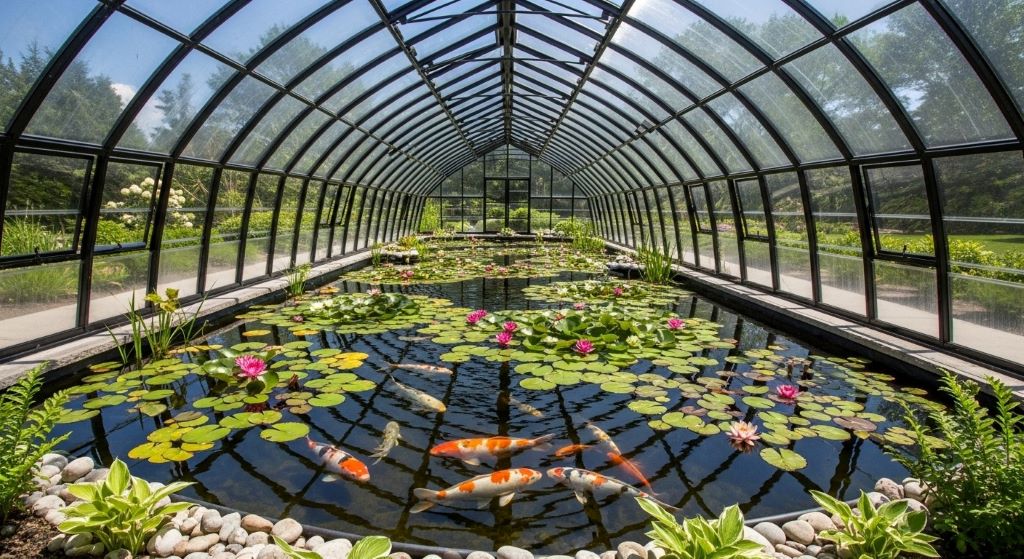
The shape and orientation of your greenhouse cover significantly impact light availability. A dome or arched design allows sunlight to enter from multiple angles throughout the day. This shape also prevents snow and debris accumulation.
Position the longest axis of your greenhouse in an east-west direction. This orientation maximizes southern exposure in the northern hemisphere. Consequently, your pond receives more direct sunlight during winter months when light is scarce.
Keep the profile low if possible. Taller structures create more shade at certain times of day. A greenhouse that sits closer to the pond surface captures more light while still providing protection. However, ensure adequate ventilation space between the water surface and the cover.
Installing Proper Ventilation Systems
Ventilation is essential for preventing overheating and maintaining air circulation. Automatic vent openers respond to temperature changes without requiring manual adjustment. These devices use wax cylinders that expand when warm, pushing vents open.
Install vents on opposite sides of the structure to create cross-ventilation. Roof vents work particularly well because hot air naturally rises. Side vents can supplement roof openings for additional airflow.
Shade cloth can be added temporarily during intense summer heat. Retractable systems allow you to control shading based on daily conditions. This flexibility helps maintain optimal water temperatures throughout changing seasons.
According to experts at the Royal Horticultural Society, proper greenhouse ventilation can reduce temperatures by 10 to 20 degrees Fahrenheit during hot weather. This temperature control protects both plants and fish from heat stress.
Selecting the Appropriate Frame Materials
Your frame must support the covering material while remaining unobtrusive. Aluminum framing provides strength without excessive bulk. It resists corrosion from pond moisture and requires minimal maintenance.
PVC pipe offers an affordable and easy-to-work-with alternative. It is lightweight and can be curved to create attractive arched designs. However, PVC may degrade under intense UV exposure over time. Choose UV-resistant varieties for longer lifespan.
Wood frames create a natural aesthetic that blends well with garden settings. Cedar and redwood resist rot naturally. Nevertheless, wood requires regular maintenance and eventually needs replacement. Treat wood with pond-safe preservatives to extend its life.
Galvanized steel provides maximum strength for larger structures. It supports heavy snow loads and withstands strong winds. The tradeoff is that steel framing can cast shadows that reduce light penetration. Minimize this effect by using thinner gauge materials where possible.
Building Techniques for Light Optimization
When constructing your greenhouse cover, minimize the number of support beams crossing the interior. Each structural element creates shadows that reduce available light. Design the frame to position major supports along the edges rather than overhead.
Use transparent or translucent sealants for joining panels. Opaque caulking creates visible lines that block small amounts of light. While these losses seem minor, they accumulate across the entire structure.
Angle panels to reduce glare and reflection. Light that bounces off the surface does not reach the pond. A slight tilt helps sunlight penetrate rather than reflect away. This consideration is especially important in winter when the sun sits lower in the sky.
Regular cleaning maintains maximum light transmission. Dust, pollen, and water spots accumulate on greenhouse panels over time. Clean surfaces at least monthly during growing season. Use mild soap and soft cloths to avoid scratching the material.
Incorporating Seasonal Adjustments
Different seasons require different approaches to pond protection. During summer, you may need to add shading to prevent overheating. Removable shade panels offer flexibility without permanent light reduction.
Winter demands maximum light penetration to support pond life during short days. Remove any temporary shading elements before fall arrives. Additionally, clear snow from the greenhouse roof promptly to restore light transmission.
Spring and fall represent transition periods requiring observation and adjustment. Monitor water temperature and plant health closely. These indicators reveal whether your greenhouse provides appropriate conditions. Make modifications as needed to maintain the delicate balance.
Monitoring and Maintaining Water Quality
Even with optimal light transmission, you should monitor pond conditions regularly. Test water temperature weekly to ensure it stays within acceptable ranges. Most pond fish thrive between 65 and 75 degrees Fahrenheit.
Check dissolved oxygen levels, especially during warm weather. According to The Spruce, maintaining adequate oxygen is critical for fish health and requires proper aeration systems in covered ponds. Your greenhouse design should accommodate aerators and fountains.
Observe plant growth patterns to assess whether light levels are sufficient. Yellowing leaves or stunted growth suggest inadequate sunlight. Conversely, excessive algae growth may indicate too much light or heat. Adjust your covering system based on these observations.
Cost-Effective Solutions for Small Ponds
Small pond owners can create simple greenhouse covers without significant expense. Cold frames adapted to fit over ponds work well for compact water features. These low-profile structures provide protection while maintaining excellent light transmission.
Hoop houses constructed from PVC pipe and plastic sheeting offer temporary protection. They are easily removed during mild weather and reinstalled when needed. This flexibility makes them ideal for regions with moderate climates.
Recycled materials can reduce costs substantially. Old windows, salvaged polycarbonate panels, and reclaimed lumber provide affordable building materials. However, ensure all materials are clean and free from contaminants that could harm pond life.
Conclusion
Creating a greenhouse cover for your garden pond requires careful planning and material selection. Transparent materials like polycarbonate or acrylic allow sunlight penetration while providing weather protection. Proper design, including dome shapes and east-west orientation, maximizes light exposure throughout the day. Adequate ventilation prevents overheating while maintaining healthy conditions for plants and fish. Regular monitoring and seasonal adjustments ensure your covered pond thrives year-round. With the right approach, you can enjoy the benefits of greenhouse protection without sacrificing the sunlight your pond ecosystem needs.
Frequently Asked Questions
What percentage of light transmission is needed for a healthy pond?
Most pond ecosystems require materials that transmit at least 80 to 90 percent of available sunlight. This level supports photosynthesis in aquatic plants and maintains proper water temperature. Choose clear polycarbonate or acrylic materials specifically rated for high light transmission.
Can I use a regular greenhouse over my pond?
Yes, but standard greenhouses may require modifications. Ensure adequate ventilation to prevent excessive heating. Additionally, verify that the structure allows enough light for pond plants and fish. You may need to remove some shading elements designed for terrestrial plant cultivation.
How do I prevent condensation from blocking sunlight?
Proper ventilation is key to controlling condensation. Install automatic vent openers and ensure good air circulation. Using twin-wall or triple-wall polycarbonate reduces condensation compared to single-layer materials. Condensation naturally decreases with better airflow and temperature management.
Will a greenhouse cover protect my pond from freezing?
A greenhouse cover provides some freeze protection by trapping heat and blocking wind. However, it may not prevent freezing in extremely cold climates. Consider adding a pond heater for additional protection during harsh winters. The greenhouse will make the heater more efficient by reducing heat loss.
How often should I clean the greenhouse panels?
Clean panels monthly during spring and summer when pollen and dust are most prevalent. In fall and winter, cleaning every six to eight weeks is typically sufficient. Regular cleaning maintains maximum light transmission and prevents buildup that could permanently damage the material.
Related Topics:
Are Jade Plants Toxic To Cats? Exploring the Greenery Dilemma