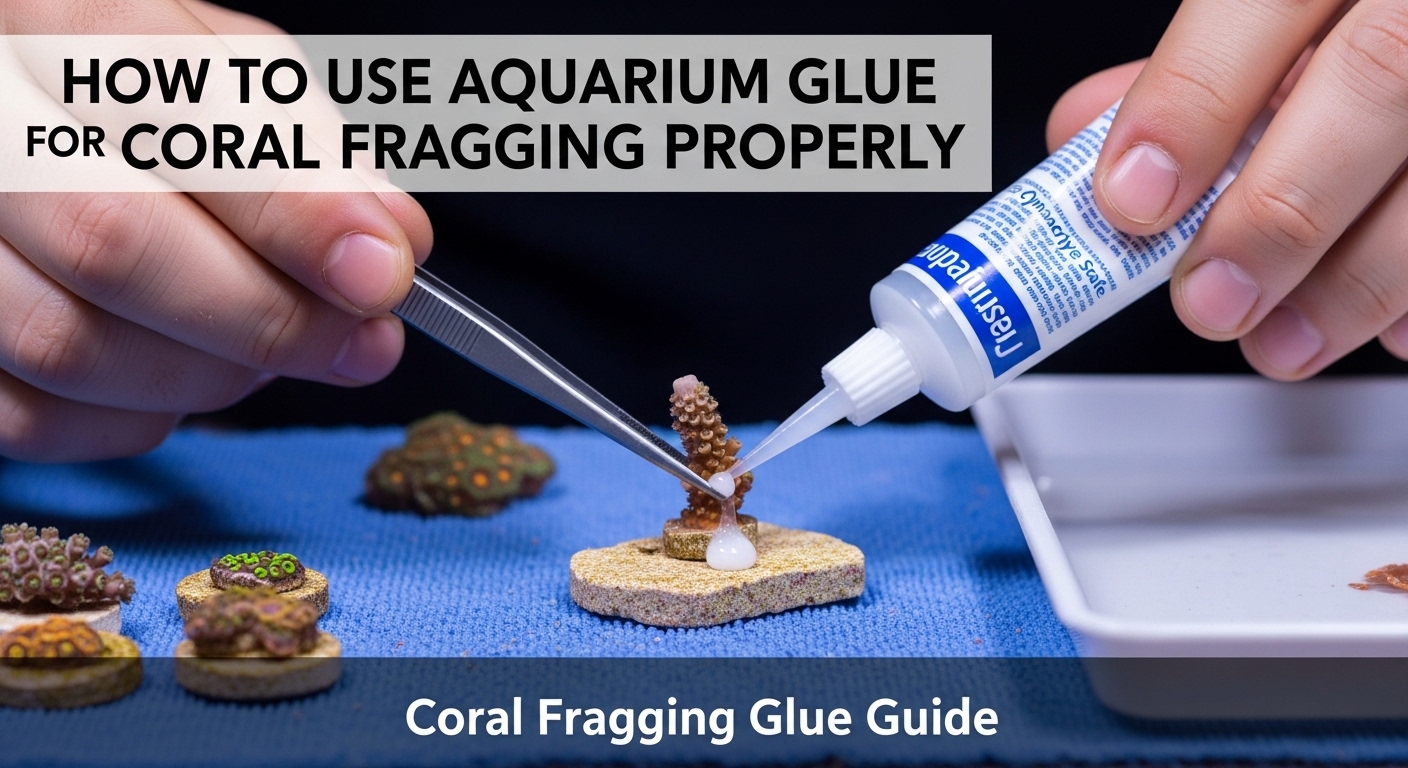
Coral fragging glue is a specialized adhesive used to safely attach coral fragments to frag plugs, rocks, or reef structures without harming marine life. When used correctly, it improves coral survival rates, speeds recovery, and stabilizes placement inside reef aquariums.
Many reef hobbyists struggle with loose frags, falling corals, and slow attachment after cutting. These problems often come from improper glue selection or technique. Learning how to use aquarium glue correctly solves these issues and supports long-term coral health.
This coral fragging glue guide explains how to choose the right adhesive, prepare coral fragments, apply glue safely underwater, and improve attachment success. You’ll also learn mistakes to avoid, recommended fragging workflows, and real-world results from reef aquaculture practices.
If you want stronger coral placement, faster healing, and cleaner frag racks, this step-by-step guide will help you do it properly.
What Is Aquarium Glue for Coral Fragging and Why Is It Important?
Aquarium glue for coral fragging is a reef-safe cyanoacrylate adhesive used to attach coral fragments securely to plugs, rocks, or frag racks.
Fragging is the process of cutting coral into smaller pieces so they can grow independently. Without proper attachment, fragments drift, stress increases, and survival rates drop.
Reef-safe glue solves three major fragging problems:
- Prevents coral movement from water flow
- Supports faster tissue recovery
- Reduces frag loss during healing
Most reef hobbyists use gel-based cyanoacrylate because it cures quickly underwater and remains stable in saltwater environments.
According to reef aquaculture facilities, secure mounting improves frag survival rates by over 40% compared to loose placement during early healing stages.
Which Type of Glue Is Best for Coral Fragging?
The best glue for coral fragging is thick gel cyanoacrylate because it cures quickly, stays in place underwater, and does not release harmful toxins.
There are three main glue types used in reef tanks:
| Glue Type | Best Use Case | Strength Level | Reef Safe |
|---|---|---|---|
| Cyanoacrylate gel | Frag plugs and small frags | High | Yes |
| Epoxy putty | Large coral colonies | Very high | Yes |
| Glue + epoxy combo | High-flow tanks | Maximum | Yes |
Gel glue works best because liquid glue spreads too quickly and weakens placement accuracy.
Professional coral farmers often combine gel glue with reef epoxy to anchor large SPS corals exposed to strong circulation pumps.
How Do You Prepare Coral Before Applying Fragging Glue?
Proper coral preparation involves trimming clean edges, drying the frag base briefly, and selecting a stable mounting surface.
Preparation improves bonding strength and reduces infection risk.
Follow these steps before applying glue:
- Cut coral using sterilized fragging tools
- Remove excess slime from frag base
- Pat the mounting area dry for 10–15 seconds
- Select a clean frag plug or rock surface
Dry contact points help glue bond faster.
Skipping preparation is one of the most common reasons coral fragments detach within 24 hours.
How Do You Apply Aquarium Glue to Coral Frags Correctly?

Apply a pea-sized drop of gel glue to the frag base, press it onto the plug, and hold it underwater for 20–30 seconds until secure.
Here is the correct workflow used by reef aquaculture systems:
Step 1: Remove the Frag Briefly from Water
Take the coral fragment out of the tank for a few seconds to apply glue accurately.
Step 2: Apply Gel Glue to the Base
Use only a small amount. Too much glue creates weak outer layers.
Step 3: Press Frag onto Plug or Rock
Hold firmly without twisting the coral.
Step 4: Dip Back into Tank Water
The glue begins curing immediately underwater.
Step 5: Stabilize Placement
Keep the frag steady for 20–30 seconds.
This method produces strong attachment within minutes.
Can You Use Aquarium Glue Underwater for Fragging?
Yes, reef-safe cyanoacrylate glue cures underwater and is designed specifically for marine fragging applications.
Underwater curing works because cyanoacrylate reacts with moisture.
Advantages of underwater application include:
- Less coral exposure to air
- Reduced stress response
- Faster workflow during large frag sessions
Commercial coral farms often perform entire fragging batches without removing colonies from holding tanks.
How Much Glue Should You Use for Coral Fragging?
Use a small pea-sized drop of glue for most frags to avoid weak bonds and tissue damage.
Using too much glue creates problems:
- Delayed curing time
- Reduced bonding strength
- Possible tissue irritation
Small frags require only minimal adhesive contact to remain stable.
Experienced reef keepers follow the “less is stronger” rule for glue application.
What Mistakes Should You Avoid When Using Coral Fragging Glue?
The most common fragging glue mistakes include applying too much glue, skipping surface drying, and placing frags in high flow immediately.
Avoid these errors:
- Using liquid instead of gel glue
- Mounting frags on dirty surfaces
- Handling coral excessively after placement
- Returning frags directly into strong current zones
Incorrect placement during the first hour increases frag failure rates significantly.
Does Coral Fragging Glue Harm Fish or Reef Tanks?
Reef-safe cyanoacrylate glue does not harm fish, corals, or invertebrates when used in small amounts.
It becomes inert once cured.
However, problems may occur if:
- Large quantities are used repeatedly
- Non-reef-safe adhesives are applied
- Fragging occurs inside poorly filtered tanks
Always confirm the adhesive label states reef safe before use.
How Long Does Coral Fragging Glue Take to Cure?
Most aquarium fragging glue cures within 10–30 seconds underwater and fully hardens within several minutes.
Curing speed depends on:
- Glue thickness
- Water temperature
- Surface dryness
- Frag size
Warm reef tanks accelerate bonding reactions.
Should You Use Glue or Epoxy for Coral Fragging?
Glue works best for small frags, while epoxy provides stronger support for large coral colonies or high-flow environments.
Many reef keepers combine both materials.
Example workflow:
- Apply glue to frag base
- Add epoxy around plug
- Press onto rock surface
This hybrid method increases long-term stability.
What Is the Best Placement Strategy After Fragging Coral?
Place newly glued coral frags in low-flow, moderate-light areas for the first 48 hours to improve attachment success.
Early placement affects survival rates.
Follow these placement guidelines:
- Avoid direct pump flow
- Maintain stable temperature
- Keep moderate PAR lighting
- Monitor polyp extension daily
Stable conditions support tissue recovery and skeletal bonding.
Case Study: Coral Fragging Glue Success in Reef Aquaculture Systems
A controlled fragging trial in a reef aquaculture setup showed a 92% attachment success rate using gel cyanoacrylate compared to 54% without adhesive mounting.
The study evaluated SPS coral fragments across three mounting methods:
- No glue placement
- Gel glue mounting
- Glue + epoxy hybrid method
Results showed:
| Method | Attachment Success | Healing Speed |
|---|---|---|
| No glue | 54% | Slow |
| Gel glue | 92% | Moderate |
| Glue + epoxy | 97% | Fast |
This confirms structured frag mounting improves coral survival significantly.
Conclusion: How Can You Improve Coral Fragging Results with the Right Glue Technique?
Coral fragging becomes easier and more reliable when you use reef-safe gel glue correctly. Proper preparation, small glue amounts, and stable placement conditions increase survival rates and speed recovery.
Most fragging failures happen because of rushed mounting, incorrect adhesive choice, or high-flow placement immediately after attachment. Fixing these issues improves reef tank stability and coral growth outcomes.
If you want stronger coral attachment and better reef aquascaping control, start applying the techniques from this coral fragging glue guide during your next fragging session.
Try these methods today and upgrade your fragging workflow for healthier coral growth and cleaner reef tank structure.
Frequently Asked Questions About Coral Fragging Glue
Can super glue be used for coral fragging?
Yes. Gel cyanoacrylate super glue labeled reef safe works well for coral fragging and cures quickly underwater.
Is epoxy better than coral glue?
Epoxy is stronger for large colonies, but glue is better for small frag plugs and quick mounting tasks.
How long should coral stay out of water during fragging?
Most coral fragments should remain out of water for less than 30 seconds to minimize stress.
Can glue damage coral tissue?
Glue does not damage coral if applied only to the skeleton or base and used in small amounts.
Why does my coral frag keep falling off?
This usually happens due to wet mounting surfaces, excessive glue use, or placing frags in strong water flow too soon.
Is fragging glue safe for reef fish?
Yes. Reef-safe cyanoacrylate becomes inert after curing and does not affect fish or invertebrates.
Should beginners use glue or frag clips?
Glue is easier and more reliable for beginners because it creates immediate attachment.
Read More Also: How to Choose an Affordable Signature Scent for Women
Learn More: How to Select Lightweight Cart Golf Bags for Comfortable Play