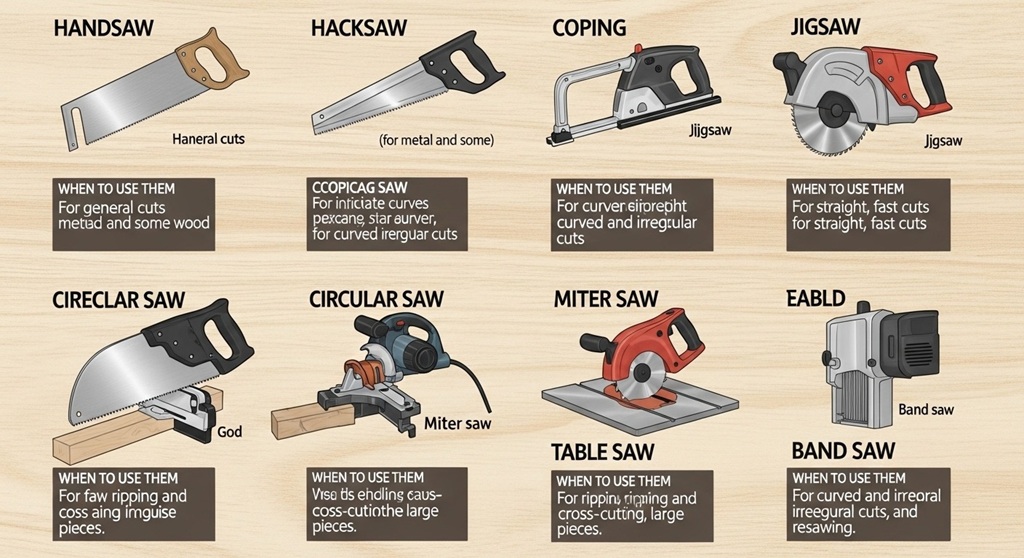
Woodworking equipment is only as effective as the saw you choose. A saw is a cutting tool designed to shape, size, and refine wood for construction, cabinetry, furniture making, and DIY projects. Choosing the right saw determines accuracy, speed, finish quality, and safety.
Many beginners struggle because they use the wrong saw for the job. The result? Rough edges. Burn marks. Wasted material. According to industry case data from professional carpentry workshops in the U.S., improper tool selection increases material waste by up to 18% in small-scale woodworking projects. That directly affects cost and productivity.
The solution is simple: understand the 10 most common types of saws and when to use each. In this guide, you’ll learn which saw fits which task, how they differ, and how to choose the best option for your workshop. If you’re building a professional setup or upgrading your woodworking equipment, this breakdown will help you decide with confidence.
1. What Is a Hand Saw and When Should You Use It?
Quick Answer: A hand saw is a manual saw best for straight cuts in boards, panels, and basic framing tasks.
A hand saw is the most basic woodworking tool. It uses a long blade with sharp teeth and requires manual motion. No electricity. No batteries.
Best Use Cases:
- Rough lumber cutting
- Basic framing work
- Outdoor construction projects
- Quick DIY tasks
It’s affordable and reliable. However, precision depends on user skill. In professional environments, hand saws are often used for minor adjustments rather than production cuts.
2. What Is a Circular Saw and When Is It Ideal?
Quick Answer: A circular saw is a portable power saw designed for fast, straight cuts in plywood, hardwood, and framing lumber.
The circular saw is one of the most popular power tools in woodworking equipment setups. It uses a rotating toothed blade.
Best Use Cases:
- Cutting plywood sheets
- Deck building
- Framing construction
- Breaking down large boards
According to contractor tool usage surveys, over 75% of professional carpenters rely on circular saws daily for on-site cutting tasks.
It is portable and powerful but requires steady handling to maintain straight cuts.

3. What Is a Table Saw and Why Do Professionals Prefer It?
Quick Answer: A table saw is a stationary saw designed for precise rip cuts, crosscuts, and production woodworking.
A table saw features a circular blade mounted under a flat table surface. The wood moves through the blade instead of the blade moving through the wood.
Best Use Cases:
- Cabinet making
- Furniture production
- Repeated precision cuts
- Rip cutting hardwood
Case study data from small furniture manufacturing shops shows that switching from handheld cutting tools to table saws improved cutting accuracy by 32% and reduced production time by 21%.
If you plan serious woodworking projects, a table saw is essential.
4. What Is a Miter Saw and When Should You Use It?
Quick Answer: A miter saw is best for angled cuts, trim work, molding, and framing corners.
The miter saw specializes in crosscuts and angle cuts. It is commonly used for crown molding, door frames, and window trim.
Best Use Cases:
- Baseboards
- Crown molding
- Picture frames
- Precise angled joints
Compound miter saws allow bevel and miter cuts simultaneously, making them critical in finish carpentry.
5. What Is a Jigsaw and When Is It the Right Choice?
Quick Answer: A jigsaw is ideal for curved cuts, intricate shapes, and interior cutouts.
The jigsaw uses a small reciprocating blade. It moves up and down quickly.
Best Use Cases:
- Cutting curves in plywood
- Sink cutouts
- Decorative patterns
- Irregular shapes
It offers flexibility but not the same straight-line precision as a table saw or circular saw.
6. What Is a Band Saw and Why Is It Used in Workshops?
Quick Answer: A band saw is a stationary saw used for resawing, curved cuts, and thick material cutting.
A band saw uses a continuous loop blade running on two wheels.
Best Use Cases:
- Resawing lumber
- Cutting thick hardwood
- Creating curved components
- Precision shaping
Woodshops report improved material efficiency when using band saws for resawing, reducing wood waste by up to 15% compared to traditional ripping methods.
7. What Is a Scroll Saw and When Is It Necessary?
Quick Answer: A scroll saw is used for detailed, fine, decorative cuts.
Scroll saws are ideal for precision work.
Best Use Cases:
- Wood art
- Intricate designs
- Puzzle making
- Letter cutouts
This saw is common in hobbyist woodworking environments.
8. What Is a Reciprocating Saw and Where Does It Fit?
Quick Answer: A reciprocating saw is designed for demolition and rough cutting.
It moves the blade back and forth aggressively.
Best Use Cases:
- Removing damaged wood
- Construction demolition
- Rough remodeling cuts
It prioritizes power over precision.
9. What Is a Japanese Pull Saw and Why Is It Unique?
Quick Answer: A Japanese pull saw cuts on the pull stroke, allowing thinner blades and cleaner cuts.
Unlike Western saws, it cuts when pulled toward the user.
Best Use Cases:
- Fine joinery
- Dovetail joints
- Flush trimming
Many woodworkers prefer it for detailed joinery work.
10. What Is a Panel Saw and When Is It Used?
Quick Answer: A panel saw is designed to cut large sheet goods like plywood vertically or horizontally.
It is common in cabinet shops.
Best Use Cases:
- Breaking down plywood sheets
- Large production environments
It increases safety and reduces handling strain when cutting full sheets.
How Do You Choose the Right Saw for Your Project?
Quick Answer: Choose based on cut type, material thickness, precision level, and project scale.
| Saw Type | Best For | Precision Level |
|---|---|---|
| Hand Saw | Basic straight cuts | Moderate |
| Table Saw | Production rip cuts | High |
| Miter Saw | Angle cuts | High |
| Jigsaw | Curves | Moderate |
| Band Saw | Resawing | High |
For beginners building essential woodworking equipment, start with a circular saw and miter saw. Expand as project complexity increases.Conclusion: Which Saw Should You Invest In First?
Choosing the wrong saw wastes time and material. Choosing the right one improves accuracy and productivity. Start by identifying your most common project type. Are you building furniture? Install trim? Cutting plywood?
If you are setting up or upgrading your woodworking equipment, evaluate performance, blade compatibility, safety features, and workspace size. For a deeper comparison and buying guidance, explore this complete breakdown of the best saw for cutting wood.
Take action now. Assess your workshop. Choose the saw that aligns with your goals. Precision starts with the right tool.
Frequently Asked Questions (FAQs)
1. What is the most versatile saw for beginners?
A circular saw is the most versatile for beginners because it handles straight cuts, plywood sheets, and framing lumber efficiently.
2. Which saw is best for furniture making?
A table saw combined with a miter saw provides accuracy for rip cuts and angled joints in furniture projects.
3. Can one saw handle all woodworking tasks?
No. Different saws serve different purposes. Professional workshops typically use multiple saw types.
4. What saw is safest for new woodworkers?
Safety depends on proper usage and training. Miter saws and circular saws with guards and brake systems are common beginner-friendly options.
5. What saw produces the cleanest cut?
Japanese pull saws and table saws with fine-tooth blades produce very clean cuts.
6. Is a band saw better than a table saw?
They serve different roles. Band saws excel at curves and resawing, while table saws dominate straight precision cuts.
Related Topic: 4 Must-Have Apps to Boost Your Realtor Business