Emergencies rarely announce themselves. A fire can break out in the middle of the night. A storm can knock out the power while everyone is asleep. An earthquake can strike without any warning at all. In those critical first moments, you will not have time to search the house for supplies. That is why having everything you need right in your bedroom makes so much sense.
Building a home safety kit for your bedroom is one of the smartest and most practical steps you can take for your family. It puts life-saving tools within arm’s reach when seconds truly matter. This guide walks you through everything you need to know, from choosing the right container to selecting the most important items to include.
Why Your Bedroom Is the Best Place to Start
Most people store emergency supplies in a garage, a closet, or a kitchen cabinet. Those locations are logical. However, they are not always accessible during a nighttime emergency. You are most vulnerable when you are asleep. Your reaction time is slower, your visibility is limited, and you may be disoriented.
Keeping bedroom emergency essentials close to where you sleep solves this problem directly. You do not need to navigate a dark hallway or search through an unfamiliar space. Everything you need is already within reach. Therefore, the bedroom is often the single most important room in your home to prepare first.
Choosing the Right Container for Your Kit
The container you choose sets the foundation for everything else. It needs to be accessible, durable, and easy to grab in a hurry.
A few strong options include:
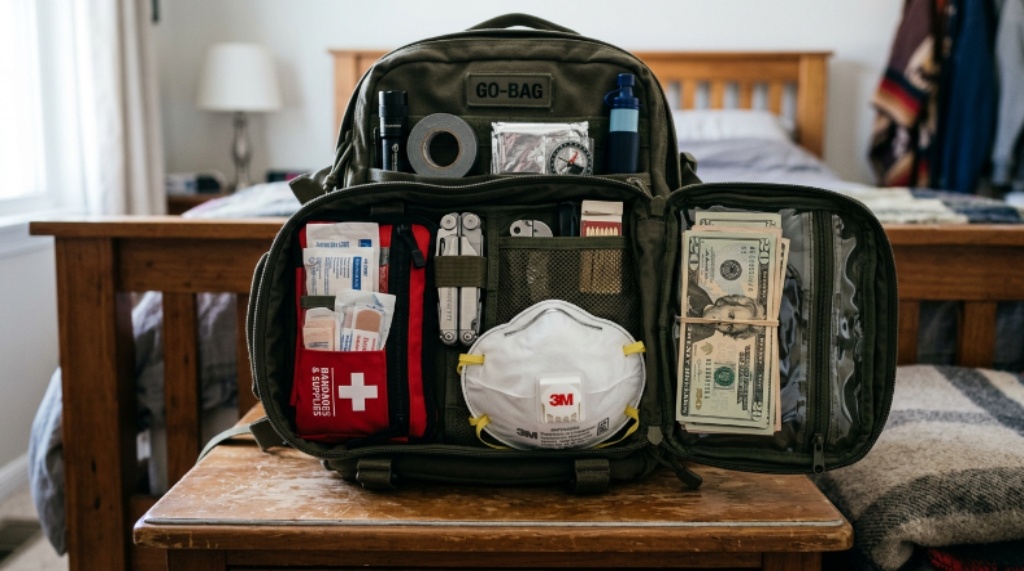
- A small backpack or go-bag that you can throw over your shoulder quickly
- A waterproof plastic bin that slides under the bed or fits in a nightstand drawer
- A soft-sided organizer that hangs on the back of the bedroom door
Whatever you choose, make sure it is clearly labeled. Additionally, every adult in the household should know exactly where it is. Children old enough to understand should also be shown the kit and taught when to use it.
Avoid overpacking the container. A kit that is too heavy or too bulky defeats its purpose. Focus on essentials that serve multiple functions wherever possible.
The Core Items Every Bedroom Emergency Kit Needs
Once you have your container, it is time to fill it. The following items form the backbone of any solid bedroom emergency kit.
Flashlight and Backup Lighting
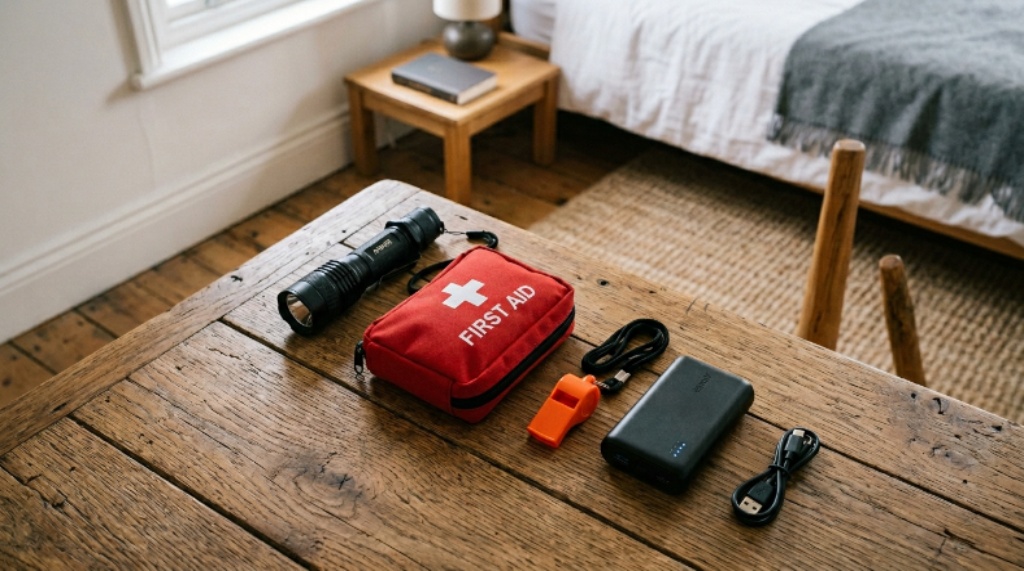
A reliable flashlight is the single most important tool in any home safety kit. Power outages are one of the most common emergencies people face. A bright, durable flashlight with fresh batteries can guide you safely out of your home in complete darkness.
Consider adding a headlamp as well. It keeps your hands free, which is especially useful if you need to carry a child or open a door. Small glow sticks are another affordable backup option that require no batteries at all.
A Charged Power Bank
Your phone is your connection to emergency services, weather alerts, and your family. However, a phone is useless if the battery is dead. A compact power bank stored in your bedroom kit ensures your device stays charged when the grid goes down.
Check the power bank every few months and top it off if needed. Additionally, keep a short charging cable tucked inside the kit alongside it.
Basic First Aid Supplies
Minor injuries happen during evacuations. People trip in the dark, cut themselves on broken glass, or scrape their hands climbing through windows. A small first aid pouch can handle these situations quickly.
Your first aid supplies should include adhesive bandages in several sizes, sterile gauze pads, medical tape, antiseptic wipes, and a pair of nitrile gloves. You do not need a full medical kit. However, you do need enough to manage common injuries until you can reach proper care.
An Emergency Whistle
A whistle is one of the most underrated tools in any survival kit. If you become trapped or disoriented, shouting for help drains your energy quickly. A loud whistle carries farther and requires almost no effort.
Attach it to the outside of your kit or hang it near your bed so you can grab it in an instant. This is especially important for children and elderly family members.
Dust Mask or N95 Respirator
Fires, structural collapses, and certain weather events release dust, smoke, and debris into the air. Breathing contaminated air can cause serious harm very quickly. Storing one or two dust masks or N95 respirators in your kit adds meaningful protection at very little cost.
A Multi-Tool or Pocket Knife
A compact multi-tool earns its space in any emergency kit several times over. It can cut a seatbelt, pry open a jammed window, tighten a loose screw, or serve as a basic knife when needed. Look for one that includes pliers, a blade, a screwdriver, and a file.
Emergency Cash in Small Bills
During widespread emergencies, ATMs and card readers often stop working. Having a small amount of cash in your bedroom kit means you can pay for fuel, food, or transportation when electronic payment systems are unavailable. Keep bills in small denominations for maximum flexibility.
Copies of Important Documents
Store laminated or waterproof copies of key documents inside your kit. These should include identification, insurance cards, a list of emergency contacts, and any critical medical information. Losing access to these documents during a disaster creates serious problems that can last for months.
Additional Items Worth Including
Once your core supplies are in place, consider adding a few more items that are particularly relevant to your situation.
- Medications: If anyone in the household takes daily medication, keep a small emergency supply in the kit and rotate it regularly.
- A folded emergency blanket: These thin, reflective blankets pack down to almost nothing and retain body heat effectively in cold conditions.
- A local paper map: GPS and phone signals are not always reliable during major emergencies. A printed map of your area is a simple but powerful backup.
- Spare glasses or contact lens solution: If you wear corrective lenses, poor vision during an emergency significantly increases your risk of injury.
- A list of family meeting points: Decide in advance where your household will gather if you get separated. Write it down and keep it in the kit.
How to Maintain Your Bedroom Emergency Kit
Building the kit is only the first step. Keeping it current and functional is equally important.
Set a reminder to review your kit every six months. Check battery levels in your flashlight and headlamp. Inspect first aid supplies for expiration dates. Rotate any medications or food items that are nearing their use-by date. Additionally, update your document copies if any information has changed.
Make this review a household habit. Involve children in the process so they understand its importance. A kit that is never checked can become a false source of security rather than a genuine one.
Preparing the Rest of Your Household
Your bedroom emergency essentials are your personal lifeline. However, true household preparedness goes further than one room.
Consider keeping a secondary kit in the kitchen or living area. Make sure smoke detectors and carbon monoxide alarms are installed and tested. Practice a fire escape plan with every member of the household at least once a year. Know the location of your main water shutoff and electrical panel.
These steps work together. Therefore, your bedroom kit becomes one part of a broader safety strategy rather than a standalone solution.
Conclusion
Building a bedroom emergency kit is one of the most practical things you can do for your household. Emergencies happen fast, and having the right tools within reach can make an enormous difference in how safely you respond. Start with a sturdy container, fill it with core essentials like a flashlight, first aid supplies, a power bank, and an emergency whistle, and add items that reflect your specific needs.
A solid home safety kit does not require a large budget or a lot of space. It requires thought, preparation, and a commitment to reviewing it regularly. Once it is in place, you can sleep with genuine peace of mind knowing that you are ready for whatever comes next.
Frequently Asked Questions
How much does it cost to build a bedroom emergency kit?
A basic bedroom emergency kit can cost as little as thirty to fifty dollars. Prioritizing multi-use items and shopping sales keeps costs low without sacrificing quality or readiness.
How often should I update my bedroom emergency kit?
Review and update your kit every six months. Check battery life, expiration dates on medications and first aid supplies, and replace anything that is worn, expired, or no longer relevant to your household’s needs.
Should every bedroom in the house have its own kit?
Ideally, yes. Each occupied bedroom should have at minimum a flashlight and a whistle. A full kit in the master bedroom or a central location can serve the whole household during larger emergencies.
What is the most important item in a bedroom emergency kit?
A reliable flashlight is arguably the most critical single item. Most nighttime emergencies involve darkness, and having a bright, dependable light source immediately improves your ability to act safely and quickly.
Can children have their own bedroom emergency essentials?
Yes. Age-appropriate items like a flashlight, a whistle, and a printed card with emergency contacts are excellent additions to a child’s room. Teaching children how and when to use these items is just as important as providing them.