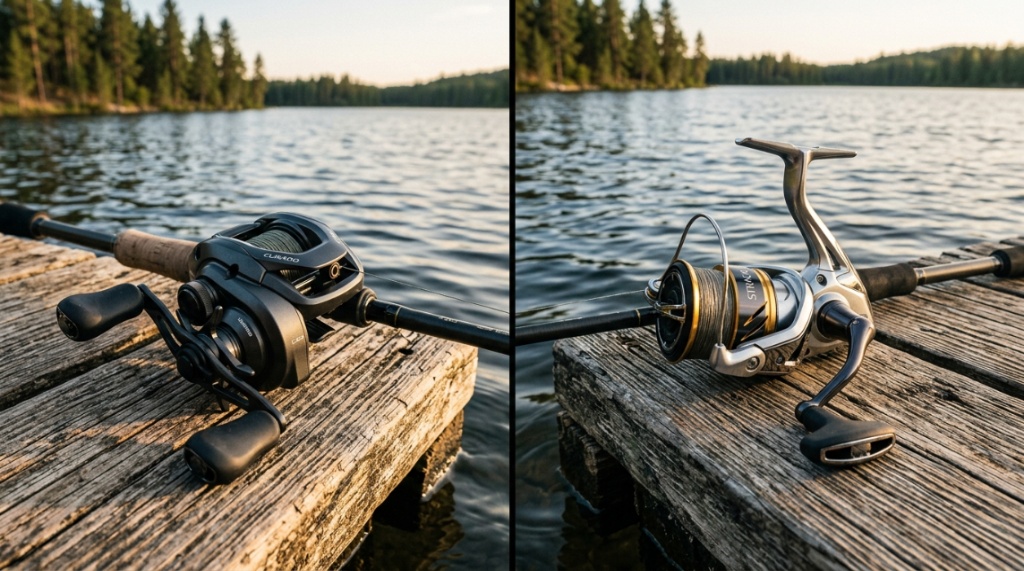
You’ve got your eye on a new reel, but the sheer number of options is enough to make your head spin. You want something that won’t break the bank, but you also don’t want to waste money on a reel that will fail you on the water. The truth is, most anglers rely on brand reputation or price alone when making a purchase, leaving performance and long-term durability to chance. This guide will walk you through a proper fishing reel comparison so you can confidently invest in gear that actually performs. We’ll cut through the marketing fluff and focus on the mechanical specs that matter most, helping you avoid buyer’s remorse and hook into fish with confidence.
What Are the Most Important Features to Compare in a Fishing Reel?
The most critical features to compare are gear ratio, drag system quality, line capacity, bearing count, and frame material. These five factors directly determine how a reel performs for specific fishing techniques, target species, and personal casting style. Focusing only on price or brand name often leads to buying a reel that either breaks down quickly or fails to handle the conditions you fish most often.
Gear ratio dictates how fast you retrieve line. A high-speed reel (like 7.3:1) retrieves line quickly, making it ideal for techniques like flipping, pitching, or throwing topwater lures. A low-speed reel (like 5.4:1) provides more cranking power, which is better for deep-diving crankbaits or pulling fish out of heavy cover. The drag system, measured in pounds, controls how much resistance a fish feels when pulling line. A smooth, sealed drag system prevents line breakage and helps tire out large fish without failure. Line capacity ensures you have enough backing to fight a fish that runs deep, while bearing count (usually 4+1 or higher) influences smoothness. Frame materials—either graphite (lightweight, less durable) or aluminum (heavier, more rigid)—affect long-term reliability under heavy load.
How Do You Test a Reel’s Drag System for Durability?
To test drag durability, spool the reel with the line you intend to use, attach a spring scale to the line, and pull until the drag starts to slip. Record the maximum poundage before slippage, then repeat the process ten times. A durable drag system maintains consistent pressure across all tests without sudden spikes or loss of tension. Carbon fiber drag washers are your best bet for longevity because they handle heat better than felt washers.
When you cannot physically test a reel, look for specifications that mention “sealed drag” or “carbontex” washers. Sealed drags keep out water, sand, and salt, preventing corrosion and maintaining smooth performance over years of use. A common mistake is assuming higher max drag numbers mean better quality. In real-world fishing, you rarely use max drag, but you rely on consistent, smooth drag at lower settings. A reel that claims 30 pounds of drag but feels jerky at 10 pounds is less reliable than a reel with 20 pounds of drag that runs glass-smooth. For saltwater fishing or targeting large species like pike or big bass, prioritize a sealed, carbon-fiber drag. For freshwater panfish or trout, a standard felt drag is usually sufficient but will wear out faster.
Which Reel Type Is Best for Your Fishing Style: Spinning or Baitcasting?
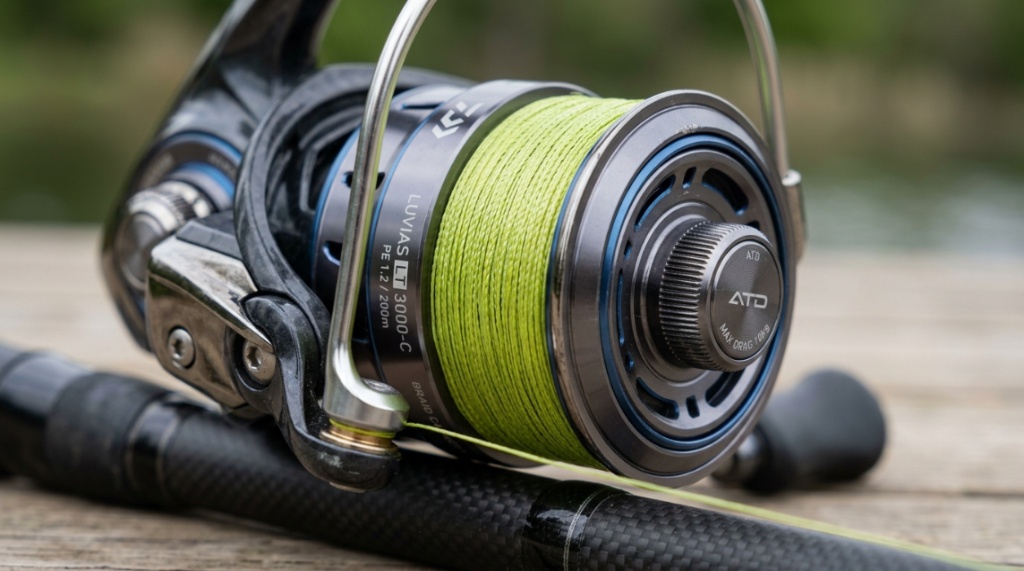
Spinning reels are best for light lures, finesse techniques, and beginner anglers because they cast effortlessly and resist backlash. Baitcasting reels excel at precise casting, heavy cover fishing, and handling larger fish because they offer better line control and increased cranking power. The choice depends entirely on your target species and preferred lures.
Spinning reels mount under the rod and feature a fixed spool. They work well with light line (2–12 lb test) and lures under 1/2 ounce. They are ideal for drop-shotting, wacky rigging, fishing live bait, or throwing small spinners. Their simplicity makes them forgiving for beginners, but they lack the torque needed for heavy lures or thick vegetation.
Baitcasting reels mount on top of the rod and have a rotating spool. They handle heavier line (10–65 lb test) and lures over 1/4 ounce with incredible accuracy. They shine when flipping jigs into cover, burning spinnerbaits, or throwing deep-diving crankbaits. However, they have a steeper learning curve due to the risk of backlash (the infamous “bird’s nest”). Experienced anglers who need fine-tuned control over cast distance and lure placement almost always prefer baitcasters for power fishing scenarios.
| Feature | Spinning Reel | Baitcasting Reel |
|---|---|---|
| Best Lure Weight | Under 1/2 oz | Over 1/4 oz |
| Line Type | Monofilament, braid, fluorocarbon (light) | Braid, fluorocarbon (heavy) |
| Casting Accuracy | Moderate | High (with practice) |
| Backlash Risk | None | High (for beginners) |
| Best Use Case | Finesse, live bait, light tackle | Cover fishing, heavy lures, power fishing |
How Does Gear Ratio Affect Your Fishing Success?
Gear ratio affects how fast you retrieve line per turn of the handle and directly influences your ability to keep a lure in the strike zone. A high ratio (7.0:1 or higher) retrieves about 30 inches per crank, while a low ratio (5.0:1) retrieves around 20 inches. Choosing the wrong ratio means either burning past fish or taking too long to work a lure, reducing catch rates significantly.
High-speed reels are commonly called “power reels” and are used for techniques where a fast, aggressive retrieve is beneficial. Examples include burning a spinnerbait across the surface, working a buzzbait, or ripping a frog over lily pads. The speed helps trigger reaction strikes from bass holding tight to cover. Low-speed reels are “cranking reels” designed for deep-diving crankbaits or slow-rolling lures over deep structure. They give you the torque to turn the handle smoothly without fatigue when the lure creates heavy water resistance. Medium-speed reels (6.0:1 to 6.4:1) are versatile all-rounders suitable for most techniques but do not excel at either extreme. If you only fish one technique, match your gear ratio to that strategy. If you fish multiple styles, consider owning one high-speed and one low-speed reel.
What Is the Ideal Bearing Count for a Long-Lasting Reel?
The ideal bearing count for a long-lasting reel is 5+1 for most freshwater applications and 7+1 for saltwater or heavy-use scenarios. More bearings generally mean smoother operation, but quality matters more than quantity. Stainless steel bearings are preferred for corrosion resistance, while bushings (found in cheaper reels) wear out faster and create friction.
Bearings reduce friction between moving parts like the spool shaft, worm gear, and handle. A reel with 10 bearings but made of low-quality steel will fail sooner than a reel with 6 bearings made of high-grade stainless steel. Look for reels that specify “stainless steel bearings” or “corrosion-resistant bearings” rather than just a high number. Place bearings are also critical. The most important bearing is the pinion gear bearing, which supports the spool during a fight. A poorly placed bearing count is misleading—for instance, some reels count the handle knob bearings as separate, but they contribute minimally to overall performance. Focus on the main gear bearings and the spool shaft bearing for the best performance per dollar.
How Do You Compare Reel Weight Without Sacrificing Durability?
To compare reel weight meaningfully, weigh the reel with line spooled to capacity, then correlate that weight with the frame material and line capacity. An extremely light reel (under 6 ounces) may indicate a graphite frame that flexes under heavy load, while a heavier reel (over 8 ounces) signals aluminum or magnesium construction that offers rigidity. Balancing weight against durability prevents fatigue while ensuring the reel can handle large fish.
Graphite-frame reels weigh about 5.5 to 7.5 ounces. They are excellent for all-day fishing with lighter lures because they reduce wrist strain. However, they can warp or crack under the strain of hookset with heavy braid or when fighting large fish. Aluminum-frame reels weigh 7.5 to 10 ounces. They offer superior rigidity, which maintains gear alignment under stress and increases longevity. Magnesium frames are the lightest of the metal options but come at a premium price. The practical approach is simple: if you primarily fish from a boat where casting is less strenuous, weight matters less. If you wade-fish or bank-fish for long hours, sacrifice a bit of durability for a lighter graphite reel, but only for lighter line classes (up to 12 lb test).
Can You Trust Online Reviews Versus Hands-On Testing?
You should trust a combination of verified customer reviews from sites like TackleTour or specialized forums and your own hands-on testing at a local shop, but never rely solely on manufacturer descriptions or YouTube influencers who receive free products. Online reviews are valuable for long-term reliability data, while hands-on testing reveals immediate feel and comfort. For a thorough, data-driven approach, check out detailed fishing reel comparison fishing reel reviews that test reels under controlled conditions for speed, drag, and durability.
Manufacturer descriptions often highlight max drag or bearing count without explaining real-world performance. A reel can claim 40 pounds of drag but use a star drag system that overheats during a long fight. Online reviews from regular anglers after six months of use reveal whether the drag stays smooth, if the handle develops wobble, or if the anodizing wears off. Hands-on testing lets you feel the handle play, the click of the drag star, and the smoothness of the spool rotation. Always spin the handle backward to check for gear noise. A reel that sounds “crunchy” out of the box will likely fail within a season.
How Much Should You Spend on a High-Quality Fishing Reel?
You should spend between $80 and $150 for a high-quality freshwater reel that will last several years under regular use. For saltwater or tournament-grade reels, expect to pay $200 to $400. Spending less than $50 on a new reel usually results in inferior materials like plastic gears and felt drags that fail in a single season. Spending more than $400 offers diminishing returns in performance but adds marginal weight savings and smoother bearings.
The biggest price jumps occur between $50 and $80, where reels transition from plastic frames and bushing systems to aluminum frames and shielded bearings. Between $80 and $150, you get sealed drags, machined aluminum spools, and stainless steel bearings. This is the sweet spot for durability and performance. Budget-conscious anglers should never buy a “combo” reel that comes pre-packaged with a rod, as these reels are almost always the lowest quality tier. Instead, buy a reel separately from a reputable brand like Daiwa, Shimano, Lew’s, or Abu Garcia. Spending a bit more upfront on a reel with a metal frame and sealed drag saves money long term because you avoid replacing broken reels every season.
What Is the Best Way to Maintain Your Reel After Comparison?
The best way to maintain your reel is to rinse it with fresh water after every saltwater trip, apply a drop of reel oil to the bearings every five trips, and grease the main gear annually. Proper maintenance extends a reel’s lifespan from one year to over a decade. Neglecting simple care causes salt crystals, sand, and debris to grind down gears and bearings rapidly.
Start by backing off the drag star before rinsing to allow water to escape. Use a gentle spray—never a pressure washer—to remove salt or dirt. Dry the reel with a soft cloth, then open the side plate to access the bearings. Add one drop of light reel oil to each bearing. Over-oiling attracts dust and creates sludge. For the main gear, use a dab of reel grease on the teeth every season. Do not grease the spool shaft or line roller unless specified. Store reels in a dry, cool place with the drag slightly loosened to prevent the washers from taking a set. A reel that sees heavy use (once a week) should get a professional cleaning every 12 to 18 months, especially if you fish in brackish or saltwater.
Which Brands Offer the Best Value for Durability?
Daiwa, Shimano, and Lew’s consistently offer the best value for durability across price points, with each brand excelling in specific areas. Daiwa’s Magsealed bearings and Air Rotor technology provide exceptional water resistance, making them ideal for kayak anglers who constantly get water on reels. Shimano is known for its smooth, quiet gears thanks to Hagane gearing and MicroModule gear technology. Lew’s offers the widest range of affordable reels with high bearing counts and strong drags, making them a favorite for budget-conscious power fishermen.
Other notable brands include Abu Garcia, which produces durable baitcasting reels with classic design, and Penn, which dominates the saltwater spincast market with rugged, heavy-duty designs. Avoid generic or off-brand reels sold on discount retail sites, as they rarely offer replacement parts or customer support. When comparing brands, look specifically at the warranty. A one-year warranty is standard, but a three-year warranty (offered by Daiwa and Shimano on higher-end models) indicates confidence in durability. Always check if the brand sells spare parts like drag washers or handle knobs, because a minor repair can extend the life of a good reel by years.
How Does Line Type Influence Your Reel Choice?
Your line type directly influences reel choice by dictating the spool depth, drag setting, and casting performance. Braid requires a reel with a smooth, high-speed drag to avoid line dig-in, while monofilament works best with deeper spools to reduce memory coiling. Fluorocarbon demands a reel with a tight line lay and strong drag to handle its low stretch and high abrasion resistance.
When fishing braid, you need a reel with a line capacity of 150 to 200 yards of 30-pound test. Braid’s thin diameter allows for deeper spools, but its lack of stretch means the drag must be silky smooth to prevent instant hook pulls or breakoffs. A reel with a “dig-in” problem (where braid cuts into itself during a cast) will frustrate you. For monofilament, choose a reel with a wide spool and slower oscillation pattern to lay the line flat and reduce springy coils. For fluorocarbon, a reel with a tapered spool and high-quality drag (carbon fiber) is essential because fluorocarbon is stiffer and requires more precise drag settings to avoid snapping. Test your line and reel combination by spooling it and making several practice casts before heading to the water.
What Are Common Mistakes Anglers Make When Comparing Reels?
The most common mistakes are ignoring the drag curve, buying based on max drag number alone, and assuming more bearings equal better performance. Anglers also fail to consider the handle length, which affects torque and fatigue. These errors lead to buying a reel that either cannot handle fish or is uncomfortable to use for extended periods.
A specific mistake is falling for “high-speed” reels for all applications. A 7.3:1 reel sounds impressive, but using it for slow-rolling a deep crankbait will exhaust your arm and produce unnatural lure action. Another error is choosing a reel with too much line capacity for light line. A spool that is only half full causes casting problems and reduces drag efficiency. Beginners often buy a reel based on a friend’s recommendation without considering if their friend’s style matches theirs. Finally, many anglers skip the most important test: spinning the handle with line under tension. A reel that feels smooth in the shop can feel rough under the load of a fish. Always try to simulate a fight by applying resistance to the line with your hand while turning the handle.
Choosing a reel with a powerful drag system ensures you can handle massive, hard-fighting species without snapping your line. Once you successfully land that trophy fish using your newly selected reel, make sure you Measure Fish Girth for the Catch-Release Formula to Estimate Weight before letting it go
Frequently Asked Questions
How often should I replace my fishing reel?
You should replace a fishing reel every three to five years with regular maintenance, or sooner if you notice grinding noises, rough handle rotation, or inconsistent drag. A well-maintained reel can last over a decade, but saltwater exposure accelerates wear.
Is a higher gear ratio better for all fishing techniques?
No, higher gear ratios are not better for all techniques. They excel for fast-moving lures like spinnerbaits or topwater but hinder presentations like deep cranking where torque and slow retrieve are necessary. Match ratio to technique, not just speed.
Can I use braid on any spinning reel?
You can use braid on any spinning reel, but you should use a reel with a sealed drag and a metal spool to handle braid’s thin diameter and lack of stretch. Graphite spools may crack under extreme braid tension, and reels without sealed drags can allow braid to cut into the washers.
What does “1+1” bearing count mean on a reel?
The “1+1” bearing count means the reel has one ball bearing for the main drive and one roller bearing for the anti-reverse mechanism. This is a minimal configuration suitable for budget reels, but it generally indicates lower smoothness and longevity compared to models with 5+1 or higher counts.
Should I buy a left-hand or right-hand retrieve reel?
You should buy a left-hand retrieve reel if you cast with your right hand and want to switch hands to retrieve. Right-hand retrieve is for those who cast left-handed and retrieve right-handed. Choose based on your natural hand dominance and comfort, not convention.
How much drag do I need for bass fishing?
For bass fishing, a drag rating of 10 to 20 pounds is sufficient for most scenarios. Lighter tackle for smallmouth or spotted bass needs around 8 to 12 pounds, while heavy-cover flipping for largemouth requires 15 to 20 pounds of smooth, reliable drag.
What is the difference between a spinning reel and a spincast reel?
A spinning reel has an open-face design with a fixed spool that casts by releasing line with a finger, while a spincast reel (like the classic Zebco) has a closed-face design with a button release. Spinning reels offer better casting distance and line control for experienced anglers, whereas spincast reels are easier for beginners due to minimal backlash risk.
Conclusion
Learning how to compare fishing reels before spending your money is the single most effective way to build a toolkit that performs exactly when you need it. You now know to look past flashy marketing and focus on gear ratio, drag consistency, bearing quality, and frame material. Every reel choice should match your specific fishing style, target species, and intended technique—not just the price tag or brand hype. Take action today by pulling out your current reels and checking their drag smoothness and gear ratio. Identify any gaps in your setup, then apply the comparison framework from this guide to your next purchase. Your future self will thank you when you set the hook, feel solid resistance, and land the fish that once got away.