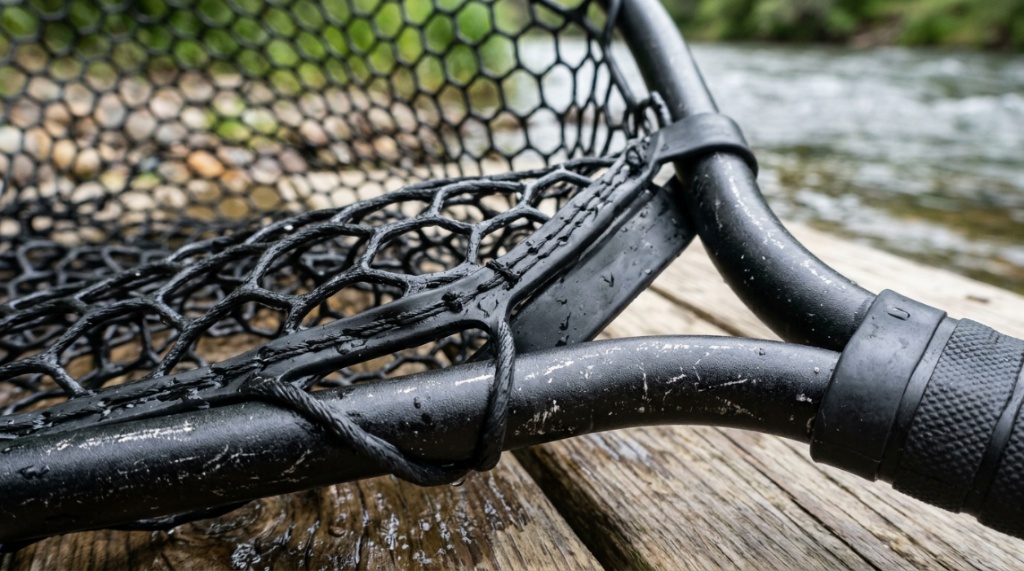
A durable fishing net for Georgia must withstand abrasive boat decks, rocky riverbeds, and the powerful fight of species like striped bass and redfish. The key lies in the frame material (high-impact nylon or aluminum), the net bag construction (coated rubber or knotless nylon), and the handle strength. A net that fails mid-landing costs you more than a fish; it ruins a memory.
The Core Stress Points in a Fishing Net
Every net has three weak points: the frame joint, the handle connection, and the bag attachment. Cheap nets use hollow aluminum or thin plastic that cracks under the heat of a Georgia summer. Look for welded or riveted joints rather than glued connections. For the handle, a solid one-piece design or a threaded lock ferrule adds years of life.
Why Local Conditions Demand Tough Gear
Georgia offers everything from the tannic-stained swamps of the Okefenokee to the salt-laden marshes of the Golden Isles. Saltwater accelerates corrosion, while freshwater mud and sand grind down moving parts. A durable fishing net Georgia anglers trust must have a corrosion-resistant frame coating or anodized aluminum finish. Stainless steel hardware is non-negotiable.
Which Net Material Lasts Longest in Georgia’s Climate?
For long-term durability in Georgia, choose a net bag made of rubberized or PVC-coated mesh. Traditional nylon bags absorb water, rot in the trunk of your truck, and snag treble hooks. Rubber mesh dries quickly, resists UV damage from the intense Georgia sun, and is far gentler on fish slime coats, which matters for catch and release.
Aluminum versus Composite Frames
Aluminum nets are lighter and stronger than plastic or fiberglass alternatives. Look for 6061-T6 aircraft-grade aluminum with a powder-coated finish. Composite frames, while corrosion-proof, can become brittle after years of UV exposure. For the average Georgia angler who stores gear in a hot truck bed, aluminum wins on longevity.
How Net Bag Depth Affects Durability
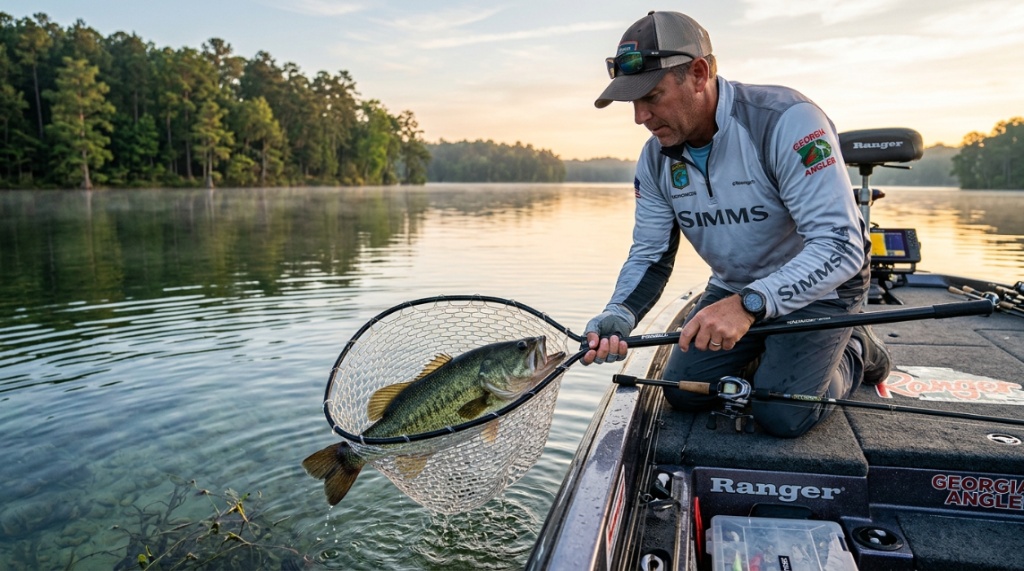
A shallow bag puts excessive strain on the frame when landing a heavy fish. A bag depth of 24 to 30 inches distributes the load more evenly, reducing frame flex and joint stress. For larger species like Georgia’s trophy largemouth bass or hefty channel catfish, a deeper bag also prevents the fish from bouncing out during the lift.
How Do You Match Net Size to Your Target Species?
Select a net hoop size based on the largest fish you expect to catch, not the average. For Georgia bass fishing, a 16-inch hoop is the minimum. For saltwater redfish or speckled trout out of Savannah or Brunswick, step up to a 20- or 24-inch hoop. Oversizing slightly improves durability because the frame carries less peak stress during a fight.
Hoop Size Guide for Common Georgia Game Fish
- Largemouth Bass: 16 to 18 inches hoop, 24-inch bag depth.
- Striped Bass: 20 to 24 inches hoop, 30-inch bag depth.
- Redfish & Speckled Trout: 20 to 22 inches hoop, 28-inch bag depth.
- Channel Catfish: 18 to 20 inches hoop, 26-inch bag depth.
- Crappie & Panfish: 14 to 16 inches hoop, 18-inch bag depth.
Handle Length and Leverage Trade-Offs
Longer handles (6 to 8 feet) help you reach fish from a high boat deck or a rocky bank, but they multiply leverage on the net frame. A handle over 5 feet should be made of aluminum with a thick wall gauge. Short handles (3 to 4 feet) are more durable and easier to store, perfect for wade fishing in Georgia’s tidal creeks.
Can a Cheap Net Ever Be Durable Enough?
A low-cost net can survive if you choose wisely, but most budget nets fail within a single season of regular Georgia fishing. The frame bends, the mesh tears at the stitching, or the handle separates. That said, there are affordable options built with solid materials that offer real durability for the weekend angler.
What to Look For in a Budget-Friendly Durable Net
If you are on a tight budget, prioritize a net with a one-piece aluminum handle and a rubber-coated bag. Avoid folding nets under $25 because the hinges are nearly always the failure point. Instead, choose a fixed-frame design with a replaceable bag. A rubber bag is more expensive initially but lasts three times longer than nylon.
When Is It Worth Spending More?
If you fish more than 20 days per year, invest in a mid-range net ($40 to $80). At this price point, you get welded frames, thicker gauge aluminum, and bags with double-stitched seams. For guides and tournament anglers, a premium net ($100+) with a full rubber bag and a machined handle lock is a long-term investment that outlasts three cheap nets.
Why Is Net Bag Hook Resistance So Important?
A net bag that snags hooks every landing slows you down, damages your lure, and wears out the mesh faster. In Georgia’s stained water, you cannot always see where a hook is caught. Knotless nylon or rubber mesh prevents hook penetration entirely. This feature alone can double the usable life of your net bag.
Rubber Mesh versus Knotless Nylon
Rubber mesh is heavier but completely hook-proof and fish-friendly. Knotless nylon is lighter and dries faster but can eventually fray where hooks scrape the fibers. For Georgia’s bass and saltwater species, rubber mesh is the durability champion. For panfish and trout where small hooks are used, knotless nylon is sufficient and more affordable.
How to Inspect Your Net Bag for Wear
After each trip, run your hand gently across the bag interior. Feel for rough spots, pulled threads, or small cuts from fish spines. Replace the bag at the first sign of fraying. A torn bag during a fight can drop a trophy fish back into the water, and net replacement bags cost far less than a new net.
What Storage Practices Extend Net Life?
Proper storage doubles the lifespan of any net. Sunlight and heat are the primary enemies of net mesh and frame coatings. After use in Georgia’s salt or freshwater, rinse the net immediately with fresh water, shake off excess moisture, and hang it to dry in the shade. Never store a wet net in a rod locker or car trunk.
Rinsing and Drying Steps
- Spray the entire net with a garden hose, paying attention to hinges and joints.
- Use a mild soap to remove fish slime and salt residue.
- Hang the net upside down by the handle so water drains from the bag.
- Allow 24 hours of air drying before storage.
- Apply a light silicone spray to metal hinges and locks once a month.
The Case for a Net Holster or Sling
Laying a net flat on the deck of a boat lets it get stepped on, tangled in gear, and covered in dirt. A rod holder-style holster keeps the net upright and protected. For kayak anglers, a bungee sling system keeps the net off the hull and reduces wear from UV exposure and rubbing against abrasive surfaces.
Which Net Features Matter Most for Kayak Fishing?
For kayak fishing in Georgia’s rivers and coastal marshes, weight, reach, and compact storage are critical. A durable net for a kayak must be lightweight enough to handle one-handed while bracing against current. Look for a rubber mesh bag, a telescoping handle, and a floating design to avoid losing gear overboard.
Floating Nets versus Sinking Nets
A net that sinks is gone the moment you drop it in dark water. Floating nets use foam-filled handles or cork grips to stay on the surface. For kayak anglers, this feature is worth the extra cost. Some premium nets even have bright orange handles for high visibility in low-light dawn hours on Georgia’s lakes.
Telescoping Handles for Storage
A telescoping handle lets you store a 6-foot net in a 4-foot kayak hatch. The locking mechanism must be metal, not plastic. Test the lock before purchase by extending the handle and applying moderate pressure. A weak lock will collapse under the weight of a fish, causing a lost catch and a potential hazard.
How Do You Test a Net Before Buying?
You cannot fully test a net in a store, but you can check three critical points. First, flex the hoop gently to feel for play in the joint. Second, pull the bag against the hoop rim to check stitching tightness. Third, collapse and extend any telescoping handle at least ten times to ensure smooth operation.
What to Look for in Stitching Quality
The stitching that attaches the bag to the hoop frame must be double-stitched or blind-stitched. Single stitching will unravel within trips. Look for UV-resistant thread, usually black or dark gray, which holds up better under sunlight. White thread degrades quickly in Georgia’s sun and is a sign of a cheap net.
If you enjoy keeping your catch healthy or maintaining freshwater environments at home, you might also want to check out the Best Affordable Aquarium LED Lights for Your Fish Tank to properly illuminate your aquatic setup
Checking the Handle Grip
A slick handle is dangerous when wet. Foam or EVA grips provide security and also cushion the hand during long days. Cork grips are classic but can crack and crumble over time. For durability, injected foam grips on a solid aluminum handle are the best combination of comfort and longevity.
Is a Rubber Net Worth the Extra Weight?
Yes, for most Georgia anglers, the extra weight of a rubber net is a fair trade for durability and fish safety. Rubber mesh weighs about 30% more than nylon, but it lasts three times longer, does not rot, and never snags hooks. The trade-off matters most for kayak anglers who need to minimize gear weight.
How to Manage the Weight of a Rubber Net
If weight is a concern, choose a smaller hoop size with a rubber bag. A 16-inch rubber net adds only a few ounces compared to a 20-inch version. Also, composite frames can offset the extra bag weight. A composite frame with rubber mesh balances durability and handling better than an aluminum frame with nylon.
The Health Benefit for Catch and Release Fishing
Rubber mesh removes less of the fish’s protective slime coat, which reduces infection risk and improves survival rates after release. In Georgia’s many catch-and-release tournaments and conservation-focused fisheries, this is a real consideration. A durable net that also protects the resource is the best long-term choice for ethical anglers.
Frequently Asked Questions
What is the most durable material for a fishing net frame?
Anodized 6061-T6 aluminum is the most durable frame material because it resists corrosion while remaining lightweight. Powder-coated finishes add further protection against scratches and saltwater exposure that cause rust.
How often should I replace my fishing net?
Replace your net when you see fraying in the bag mesh, cracks in the frame coating, or looseness in the handle joint. With proper care, a quality net lasts 3 to 5 years of regular use. Inspect it thoroughly before each season.
Can I repair a torn net bag?
Yes, many net bags are replaceable. Check if the manufacturer sells replacement bags matched to your net model. Attempting to stitch a torn bag yourself is usually temporary because the stress concentrates at the repair point.
Do I need a different net for saltwater and freshwater fishing in Georgia?
One net can serve both if it has a corrosion-resistant frame and a rubber or PVC-coated bag. Rinse the net thoroughly with fresh water after every saltwater trip. Salt crystals left to dry will accelerate wear on all materials.
What net length is best for wade fishing in Georgia rivers?
For wade fishing, a net with a 3- to 4-foot fixed handle is ideal. Longer handles drag in the water and create resistance. Telescoping handles set to a short length work well for wading when you need to save storage space.
Is a folding net less durable than a fixed-frame net?
Yes, folding nets have hinges that are the first failure point. If portability is essential, choose a folding net with a metal hinge mechanism and a locking collar that prevents accidental collapse during use. Avoid plastic hinges entirely.
How do I clean a rubber net bag after fishing in muddy water?
Rinse the bag with a strong spray from a garden hose to remove mud and debris from the mesh openings. Let it dry completely in the shade before storage. Do not use a pressure washer, as high pressure can damage the mesh connections at the hoop.