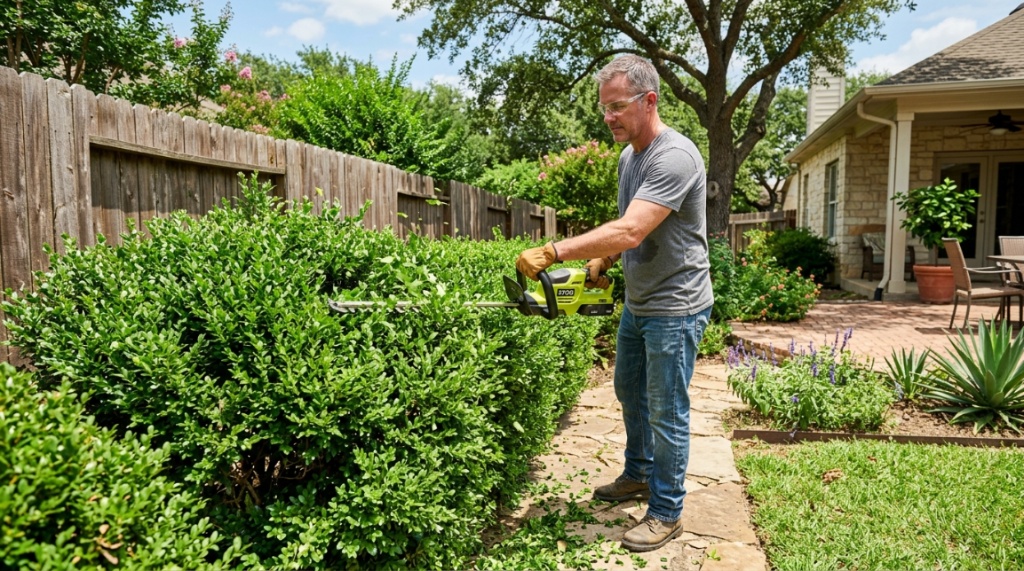
Texas landscaping is a different beast. The intense summer heat, persistent humidity along the Gulf Coast, and the unpredictable freeze-thaw cycles in the Panhandle put serious stress on your equipment. If you are wrestling with overgrown yaupon holly, tangled ligustrum, or that sprawling photinia hedge, you already know that a gas trimmer is heavy and loud, while a corded model restricts your reach. The real challenge in the Lone Star State is finding a battery-powered unit that won’t overheat mid-job or die after a few months of heavy use. This guide walks you through exactly what to look for in a reliable cordless hedge trimmer texas homeowners actually trust, helping you avoid the common pitfalls of buying on specs alone.
Key Takeaways
- Battery platform matters more than the trimmer itself: Sticking with a reputable battery ecosystem (like DeWalt, Milwaukee, or EGO) ensures you can swap batteries and avoid brand-lock.
- Texas heat kills cheap batteries: Look for “cold-cell” or high-quality lithium-ion packs rated for high ambient temperatures; cheap cells degrade quickly in 100°F+ weather.
- Blade length versus torque trade-off: Longer blades (26–28 inches) are efficient in Texas, but you need adequate torque to chew through thick, woody privet without stalling.
- Anti-vibration and weight are non-negotiable: Trimming cedar elm sprouts for an hour in July requires a balanced tool; an 11-pound nose-heavy trimmer will exhaust you quickly.
- Warranty and local service support: A reliable trimmer is only as good as the warranty support available when it inevitably takes a hard knock.
Why Texas Demands a Different Standard for Cordless Trimmers
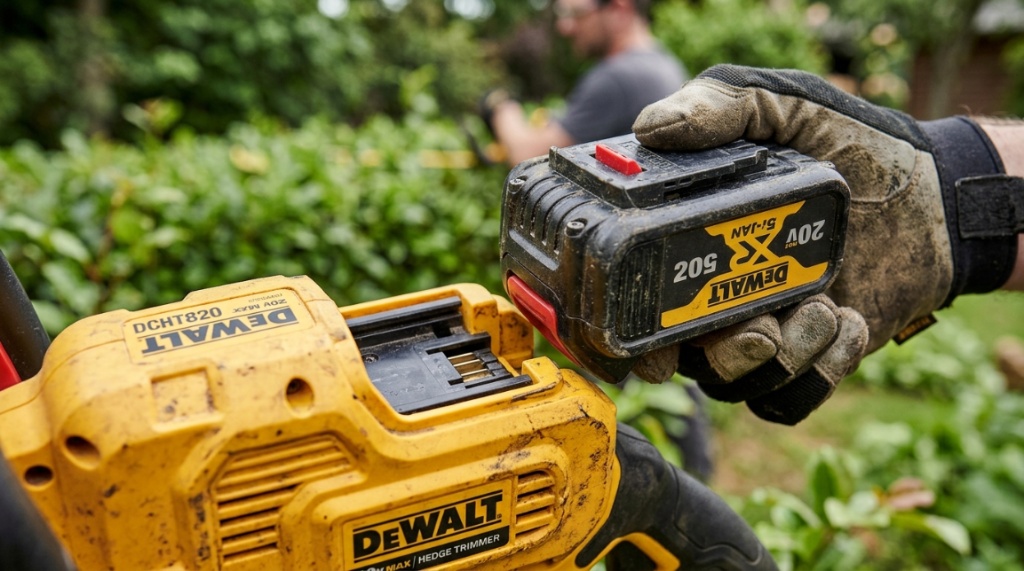
If you’ve used a cordless trimmer in milder climates, you might think all models are created equal. Texas disabuses you of that notion quickly. The primary issue isn’t just runtime; it’s thermal throttling. Most budget-friendly trimmers use lithium-ion cells that lack adequate thermal management. When the ambient temperature hits 95°F and you’re working against the side of a brick wall reflecting heat, the battery management system (BMS) will shut the tool down to prevent damage. This isn’t a defect; it’s a safety feature. However, a reliable cordless hedge trimmer texas owners recommend will feature batteries with higher discharge rates and better heat dissipation, allowing them to run longer without cutting out every ten minutes.
Additionally, Texas growth patterns are unique. We don’t just have soft new growth; we have branches that have hardened into wood after months of drought. A trimmer designed for pristine boxwoods in the Pacific Northwest will bog down here. You need a machine with sufficient cutting power—measured in strokes per minute (SPM) and torque—to slice through dead wood and mature branches without shredding them.
Critical Battery and Power Considerations for Long Texas Jobs
Before you even look at the blade, you must assess the power source. In the cordless world, the battery is the heart of the operation. Most reputable models use either 40V or 80V platforms. The higher voltage doesn’t necessarily mean more power, but it often indicates a larger physical cell configuration designed for sustained output.
Voltage and Amp-Hours: What Actually Matters
Do not buy a trimmer solely on voltage. A 40V trimmer with a 4.0Ah battery can outperform a 60V trimmer with a 2.0Ah battery in runtime. The amp-hour (Ah) rating indicates fuel tank size. For Texas-sized properties—which often involve 50+ linear feet of hedge—you want at least a 2.5Ah battery, but preferably a 4.0Ah or higher. This ensures that you can complete a full perimeter trim before needing a recharge.
Heat Management and Charging
You must buy a kit that includes a “rapid charger” or at least a charger that cools the battery. In the summer, charging a hot battery immediately after use can permanently damage the cells. A reliable unit will have a charger with an internal fan. Furthermore, consider buying a trimmer that is compatible with a larger battery from the same brand line. For instance, if you already own a leaf blower from a specific brand, buy the “tool only” trimmer version to save money and utilize your existing high-capacity batteries.
Blade Configuration: Matching Steel to Texas Foliage
The blade is where the “rubber meets the road.” There are two primary styles: single-action and dual-action blades. Dual-action blades move back and forth simultaneously, reducing vibration significantly. This is critical for user comfort during longer jobs, but it can sometimes reduce cutting force on very thick branches.
Length and Tooth Gap
For Texas mesquite, hackberry, and thick ornamental grasses, look for a tooth gap of at least ¾ inch. A larger gap allows thicker branches to seat deeper into the blade, preventing stalling. Blade length is a trade-off. A 24-inch blade offers excellent reach and reduces bending, but it increases leverage on your wrists. A 20-inch blade is nimble for intricate shaping but will cause you to bend over more often. Most Texas homeowners find a 22- to 24-inch blade to be the sweet spot.
Weight and Ergonomics: The Hidden Deal-Breakers
Spec sheets often list weight, but they rarely explain how that weight balances. A trimmer with a rear-mounted motor (closer to your rear hand) feels much lighter than a trimmer with a heavy motor at the front, even if they weigh the same. The “nose-heavy” issue is the number one cause of early fatigue.
Handles and Grip Comfort
Look for a rotating rear handle. This is perhaps the most overlooked feature. When you are trimming the top of a tall hedge, you naturally angle your wrist. A rotating handle allows you to maintain a neutral grip, reducing strain on your carpal tunnel. Also, inspect the front handle. It should have a “boot” or over-mold grip that absorbs vibrations rather than transferring them to your hand. If you have arthritis or prior wrist injuries, prioritize this over raw power.
Commercial-Grade vs. Residential: Making the Right Investment
There is a significant gap between a $150 homeowner trimmer and a $400 professional model. The cost difference usually reflects the gear system and the motor internals. Residential trimmers often use plastic gears inside the gearbox. These are fine for soft growth but are prone to stripping if you hit a wire fence or a piece of buried rebar. Commercial or “prosumer” models use hardened steel gears and metal crankcases. For a Texas yard with rocky soil and dense planting, buying a residential model is a false economy if you have more than just a small foundation hedge.
Consider your property type. If you have formal hedges that need trimming every two weeks, a mid-range model is fine. If you are clearing overgrown fence lines or tackling woody shrubs, you need the durability of a prosumer model. The initial extra $100–$150 investment is worth it when you avoid a gearbox replacement in two years.
Comparing Top Battery Platforms for Texas Conditions
To simplify your search, let’s break down the major platforms and how they handle Texas-specific demands.
| Battery Platform | Voltage | Best For | Texas Heat Performance | Watch Out For |
|---|---|---|---|---|
| EGO Power+ | 56V | Large yards, dense wood | Excellent arc lithium technology; runs cool | Batteries are heavy; initial cost is high |
| Milwaukee M18 FUEL | 18V (High Output) | Heavy-duty thick branches | Great with High Output 12.0Ah pack; runs hot on standard packs | Requires buying into the M18 platform for best results |
| DeWalt 20V MAX | 20V | Versatility across tools | Good thermal shutdown threshold; battery communication advanced | Standard 2.0Ah batteries drain fast; need 5Ah+ |
| Greenworks Pro | 60V | Budget-conscious buyers needing power | Decent, but chargers can be slow to cool packs | Availability of parts may be limited in rural areas |
Notice that most of these platforms are not dedicated to trimmers; they are ecosystems. This is vital. In Texas, where power outages during winter storms are a reality, having a battery platform that powers a fan, a blower, and a chainsaw is more valuable than a single tool. A reliable cordless hedge trimmer texas residents keep in their garage is almost always the second or third tool in a shared battery family, not the first, Maintaining a lush, vibrant landscape in the Lone Star State takes consistency, especially when managing stubborn summer growth. To keep your yard looking immaculate between heavy trimmings, check out these Daily Gardening Habits Every Homeowner Follows in Austin, TX.
Maintenance and Post-Trim Care
Owning the tool is only half the battle. Texas sap—especially from mesquite and pecan trees—is practically glue when it dries. If you leave sap on the blade, it will rust quickly in the humid Gulf Coast air. After each use:
- Clean immediately: Spray the blade with a silicone-based lubricant or WD-40 before you put it away. This prevents sap from hardening.
- Sharpen or replace: Most blades can be sharpened with a flat file. However, if you hit dirt frequently, you will dull the edge fast. Do not use a grinding wheel; it heats the steel and ruins the tempering.
- Storage: Store the trimmer hanging up, not resting on the blade. Resting on the blade can bend teeth and put pressure on the gearbox, causing micro-cracks over time.
- Battery storage: Do not leave a fully charged battery in your truck during a Texas summer. High temperatures in a closed vehicle can cause the battery to swell or fail. Store them indoors at room temperature, ideally at a 50% charge if you won’t use the trimmer for a month.
Frequently Asked Questions
How long does a cordless hedge trimmer battery last in high heat?
In 100°F heat, a standard 4.0Ah battery typically delivers 25–40% less runtime than in 70°F weather. The battery management system reduces output to prevent overheating. You can mitigate this by keeping a spare battery in the shade and rotating them to allow the other to cool.
Can I use a hedge trimmer on wet Texas grass?
No. Using any electric trimmer on wet foliage increases the risk of electric shock and causes the plant matter to clump, which clogs the blades. Additionally, wet leaves conduct electricity, creating a hazard if the tool has any micro-cracks in the motor housing.
Is an 80V hedge trimmer worth the extra cost?
Only if you have deep, woody hedges or long runtime needs. The 80V batteries are heavy, and the weight can be tiring overhead. For most residential jobs with regular trimming, a high-quality 40V or 60V model is more than sufficient and much easier to handle.
What does “dual-action” mean for trimming thick branches?
Dual-action blades move in opposite directions, cancelling out vibration. While this improves comfort, it can slightly reduce the shearing force compared to a single-action blade on very thick, brittle wood. If you primarily cut soft green growth, dual-action is superior. If you are cutting ½-inch wood, ensure the trimmer has high torque.
When should I replace a cordless trimmer instead of repairing it?
If the gearbox fails or the motor burns out, it is usually more cost-effective to purchase a new “tool only” unit. Repairing these tools costs anywhere from 60% to 80% of the new price. If the battery fails and a new one costs the same as the tool with a battery, replace the entire kit.
Conclusion
Finding the right cordless hedge trimmer for Texas isn’t about chasing the highest voltage rating. It’s about building a coherent battery ecosystem that manages heat, choosing blade length based on the woody density of your specific yard, and prioritizing ergonomics so you can handle the brutal summer sun without unnecessary strain. Spend your money on a reputable battery platform first, then select the “tool only” trimmer that fits your hand. Avoid budget brands that skimp on the gearbox or thermal management, as they will inevitably fail in the heart of a Texas summer. Take the time to maintain the blade after every use, and your battery-powered trimmer will easily last a decade or more, making hedge work a surprisingly manageable part of your landscaping routine.