
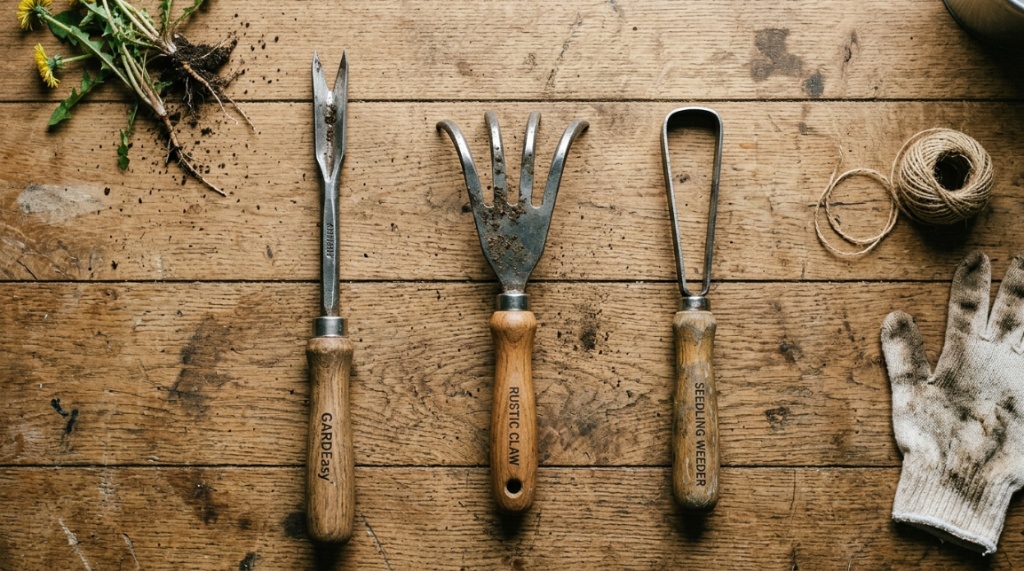
Dealing with dandelions, plantain, and thistle in an Ohio garden often feels like a never-ending battle. The ground here ranges from heavy clay that bakes in the summer to soft loam that turns soggy in the spring, which means the weed puller you choose has to handle a wide range of conditions without breaking your budget. You need a tool that actually removes the root rather than just snapping off the leaves, but you also don’t want to spend a fortune on something that will bend or rust after one season. Whether you are tired of kneeling on wet soil or simply want to speed up your weekend chores, selecting the right tool comes down to understanding your soil type, the tool’s mechanics, and the value you are getting for your money. This guide breaks down exactly what to look for so you can make a smart purchase that saves your back and your wallet.
Key Takeaways
- Match the tool type to your Ohio soil: a fork-style puller works best for clay, while an auger or claw style is better for sandy or loamy soil.
- Prioritize a solid steel head and a handle that reaches your waist to ensure the tool lasts and prevents back strain.
- Look for a weed puller with a foot step or pivot point that uses your body weight to loosen deep taproots without excessive effort.
- Before buying, check the return policy and warranty, as affordable tools can vary significantly in build quality and durability.
Why a Dedicated Weed Puller is Worth the Investment
A dedicated stand-up weed puller is different from a standard hoe or a hand trowel because it is specifically engineered to grip the root and extract it intact. In Ohio, where crabgrass and dandelions can quickly take over a lawn, leaving the root in the ground guarantees the weed will regrow within a week. Using a dedicated tool minimizes soil disturbance, which prevents new weed seeds from being brought to the surface. It also saves your knees and back, as you remain standing while working. If you have a large property or a vegetable garden with defined rows, the time savings alone justify the cost. You can find a decent model for under sixty dollars, but the key is knowing which affordable option will actually hold up to Ohio’s demanding soil conditions rather than wasting money on a flimsy gadget.
Understanding Ohio Soil Conditions
Before you even start comparing products, you need to understand what the tool will be working against. The type of soil in your garden determines how much force the tool must withstand and how well it can grip the root.
Clay Soil
If your garden sits on clay soil, which is common in central and western Ohio, you know how sticky and dense it can be. Clay clings to metal, making it hard to remove the weed once it is loosened. Look for a weed puller with a release mechanism, such as a lever or a sliding collar, that pops the weed out of the jaws without you having to bend over and manually pull it free. A sharp blade is also critical because it needs to cut through the dense earth cleanly rather than tearing it.
Sandy and Loamy Soil
Gardeners in eastern Ohio or near river valleys often have sandier or loamier soil. This type of ground is easier to penetrate, but it also means the weed root may slip through the clamp. A claw-style puller or an auger-style tool works well here because they create a firm grip around the root. In looser soil, you do not need as much leverage, so a lighter tool is acceptable, which usually means you can save some money without sacrificing performance.
Identifying Your Soil Type
To determine your soil type quickly, pick up a handful of moist soil and squeeze it. If it forms a tight ball that does not crumble easily, you have clay. If it feels gritty and falls apart immediately, you have sandy soil. If it holds together but crumbles with gentle pressure, you have loam. Matching the tool to this condition is the first step toward a successful purchase.
For a closer look at models that handle both dense clay and loose soil without a hefty price tag, check out this detailed review of an affordable weed puller tool for Ohio gardens that performs well in real-world conditions.
Key Features to Compare in Affordable Models
When you are shopping on a budget, you cannot afford to make a mistake. Focus on the specific components that impact performance and durability the most. These features are the difference between a tool that lasts a decade and one that ends up in the recycle bin by fall.
Head Material and Sharpness
Look for a head made of hardened steel or stainless steel. Some budget models use painted mild steel, which is fine initially but will rust once the paint chips off, which happens quickly in abrasive clay soil. Stainless steel resists rust but can be softer and require more frequent sharpening. Hardened carbon steel holds an edge well and resists bending, making it the best all-around choice for Ohio conditions. Check the edges to see if they are forged or just stamped; stamped edges are thinner and can bend if you hit a rock.
Handle Length and Grip
The handle should reach your waistline when standing upright. If the handle is too short, you will be forced to hunch over, which negates the benefit of a stand-up tool. A foam or rubber grip is worth paying a little extra for, as it reduces vibration and prevents blisters during a long weeding session. If you are taller than average, look for models with an extended handle option, as a non-adjustable standard handle may cause back discomfort,
To protect your delicate plants and backyard ecosystems from shifting seasonal temperatures while keeping your landscape thriving, use a clear Greenhouse to Cover Garden Pond Without Blocking Sunlight.
Foot Step and Leverage
One of the most important features for heavy soil is a foot step near the base of the tool. This allows you to push the head into the ground using your body weight rather than just your arm strength. Once the head is in the ground, the foot step also helps you tilt the tool back to loosen the root before pulling. Without this feature, you will struggle in dry or compacted Ohio clay, and you will likely break the handle or the shaft connection.
Manual vs. Mechanical vs. Electric Options
The market offers a range of tools that all fall under the “weed puller” category. Knowing the difference helps you narrow down your options based on your physical ability and the scale of your weed problem.
| Tool Type | Best For | Price Range | Effort Required |
|---|---|---|---|
| Manual Stand-up Puller | Small to medium gardens, spot removal | $30 – $60 | Moderate physical effort |
| Mechanical Pivot Puller | Deep taproots (dandelions, thistle) | $50 – $80 | Low effort, high leverage |
| Auger / Drill Attachment | Large infestations, soft soil | $40 – $100 | Minimal effort, requires a drill |
| Electric / Cordless Puller | Large lawns, users with back issues | $150+ | Very low physical effort |
Manual pullers are usually the most affordable and are sufficient for most home gardens. Mechanical pivot pullers use a compound leverage system that multiplies your strength, making them ideal for Ohio clay, but they are heavier and more expensive. Auger attachments are excellent for clearing large patches of weeds quickly, but they require a high-torque drill and can struggle in rocky soil. Electric pullers are convenient but are often overkill and can be problematic in wet conditions, creating a safety hazard.
Step-by-Step Guide to Using a Stand-Up Puller Effectively
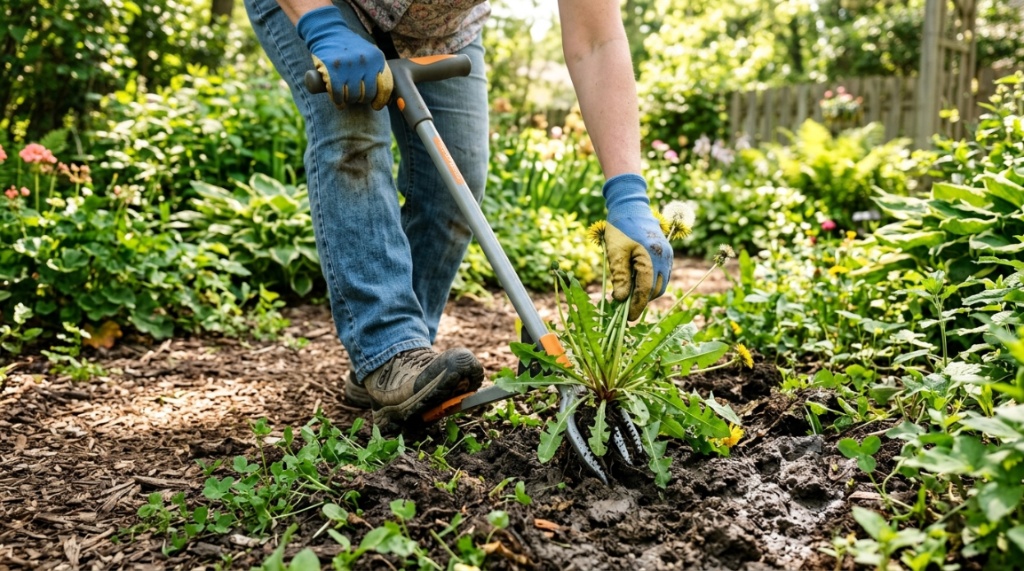
Having the right tool is only half the battle; using it correctly is essential to getting the root out completely. Here is a simple method that works well in most Ohio garden conditions.
- Wait for the right moisture level: Weeds are easiest to pull when the soil is slightly moist. If the ground is bone dry, water the area an hour before you plan to weed. If it is soaking wet, wait a day to avoid pulling up huge clumps of mud.
- Position the tool directly over the weed center. Place the jaws or prongs around the base of the plant so that the stem is centered. Make sure the weed is not leaning to one side, or the root may snap off.
- Step down firmly. Use the foot step to push the tool straight down into the soil. Push until the jaws are fully buried, usually 3 to 5 inches, depending on the root depth.
- Lever the handle back. Pull the handle toward you, pivoting on the foot step or the fulcrum point. This action loosens the soil around the root and breaks the suction holding it in place.
- Lift and remove. Pull the tool straight up. The weed should come out with the root intact. If the weed falls out of the jaws before you lift it, check to see if the root ball is too large or if the jaws are worn.
- Release and dispose. Use the release lever or step to open the jaws and drop the weed into your bucket. Do not compost weeds that have already gone to seed, as your compost pile may not get hot enough to kill the seeds.
Common Mistakes to Avoid When Buying and Using
Many gardeners end up frustrated with their weed puller simply because they made an avoidable mistake during the buying process or the first few uses. Here are the most common pitfalls and how to sidestep them.
Mistake 1: Buying a Tool with a Plastic Shaft
Plastic shafts are common on cheap tools, but they cannot withstand the torque required to remove a deep root from heavy clay. The plastic tends to twist or snap at the connection point. Always choose a full metal shaft or a wooden shaft with a metal ferrule.
Mistake 2: Pulling When the Soil is Too Wet
When the soil is saturated, the jaws will slip off the root because the soil becomes slick and acts as a lubricant. This also causes soil compaction and leaves behind a messy, muddy hole. Wait until the soil is “workable,” meaning it crumbles in your hand rather than forming a slick paste.
Mistake 3: Ignoring the Safety Release
Some pullers have a mechanism that holds the weed tightly until you press a trigger. If you buy a tool with this feature, practice using it a few times. Many people throw the tool down and try to manually knock the weed out of the jaws, which can break the mechanism.
Mistake 4: Using the Wrong Tool for Creeping Weeds
Stand-up weed pullers are excellent for taproots and clumping weeds, but they are ineffective against creeping weeds like bindweed, ground ivy, or quackgrass. These weeds spread via underground runners, and pulling up a single segment will not kill the plant. For these types, you need a different strategy, such as herbicide application or smothering.
Maintenance Tips to Extend the Life of Your Tool
An affordable tool can last for years if you give it a minimal amount of care. The biggest enemy of metal tools in Ohio is the moisture and freezing temperatures during the winter. Here is how to keep your tool in working order.
After each use, rinse the head with a garden hose to remove all dirt and plant sap. Dry it thoroughly with a rag. Once or twice a season, wipe the metal parts with a light coat of linseed oil or WD-40 to prevent rust. During the winter, store the tool indoors in a shed or garage; leaving it outside in the elements will cause the handles to crack and the metal to corrode. If you notice the jaw edges are becoming dull, use a flat file to sharpen them.
Frequently Asked Questions
Can an affordable weed puller handle dandelions?
Yes, most affordable stand-up pullers handle dandelions effectively if the soil is moderately moist. Look for a tool with a deep V-shaped notch or a three-prong claw, as these are specifically designed to grip the long taproot of a dandelion without it sliding free.
How deep does a weed puller need to go?
For most common weeds like dandelions and plantain, the tool should penetrate at least 3 to 4 inches into the soil. If you are dealing with thistle or dock, look for a tool that can reach 5 to 6 inches, as these weeds have exceptionally deep roots.
Is a weed puller better than a hoe for a vegetable garden?
It depends on the stage of the weeds. A hoe is better for large areas of young, tiny weeds that have not established strong roots. A stand-up puller is better for removing mature weeds that are scattered among your vegetables, because it removes the entire root and does not disturb the surrounding soil as much as a hoe would.
What is the difference between a weed puller and a weed twister?
A weed puller uses a prying motion with leverage to lift the root out. A weed twister works by screwing a forked tool into the ground and then twisting it to wrap the root around the prongs. Twisters are very effective in hard, dry soil, but they require more manual twisting effort and can be slower.
How often should I replace the sharpening on my weed puller?
You should sharpen the blade at least once a year, preferably in the spring before the main weeding season. If you are pulling weeds from sandy soil, you may need to sharpen more frequently, as sand acts like sandpaper and dulls the edge quickly.
Are weed pullers suitable for people with arthritis or weak grip?
Yes, but you should look for specific features. A tool with a long handle and a foot step requires less grip strength and bending. Models with a trigger-release mechanism that sits right by your hand are much easier to operate than those that require you to twist the handle to release the weed.
Conclusion
Finding the right affordable weed puller for your Ohio garden is less about the price tag and more about matching the tool to the soil and the physical demands of the job. Focus on a model with a solid steel head, a comfortable handle height, and a foot step for leverage. Avoid flimsy plastic parts and always take soil moisture into account before you start pulling. By reviewing the specific features that hold up to clay and the maintenance that keeps the tool rust-free, you can buy once and buy right. Take a few minutes to assess your garden’s soil type and your own physical needs, then choose a model that offers the best combination of durability and value. Your back and your garden will thank you for it.

