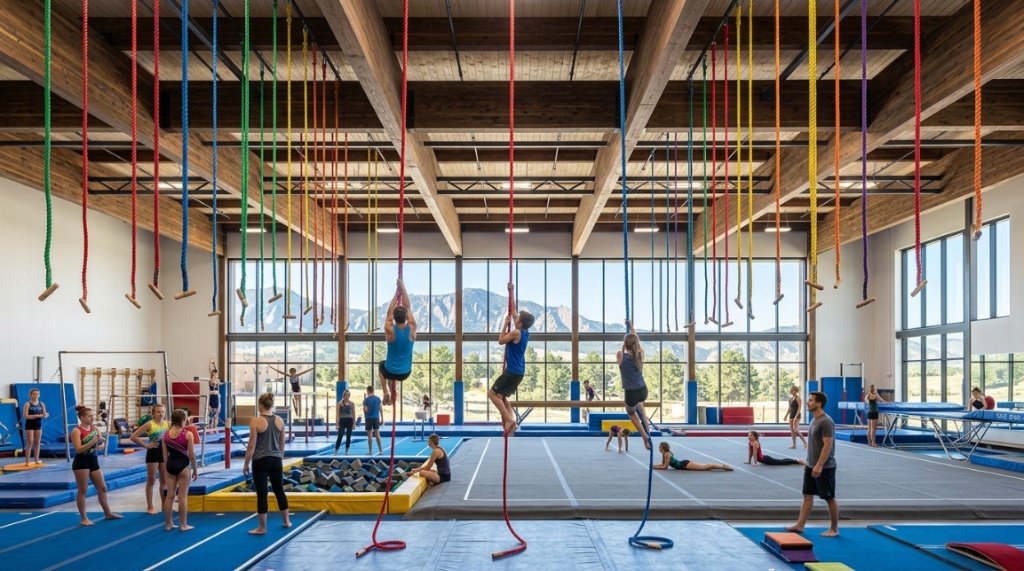
Training on a gymnastics rope in Colorado is a different beast than doing it almost anywhere else in the country. Between the high altitude, varying gym conditions, and the year-round outdoor climbing culture, your equipment takes on a level of importance that most athletes don’t consider until it’s too late. Whether you’re a competitive gymnast, a CrossFit athlete, or a climber working on upper-body power, choosing the right rope isn’t just about grabbing the first one off the shelf. The differences in material, diameter, and mounting hardware significantly affect your performance, safety, and grip. This guide walks through the exact criteria you need to evaluate when selecting gymnastics ropes colorado training, so you can make a smart, informed purchase rather than a guess.
Key Takeaways
- Colorado’s dry climate and altitude demand a rope with high UV resistance and low moisture absorption to prevent premature fraying and mildew buildup.
- Diameter selection (1.5″ vs. 2″) is not a one-size-fits-all decision; it depends on your hand size, skill level, and whether you compete in USA Gymnastics or train for functional fitness.
- Hardware and mounting options vary significantly between steel-core eyebolts, swivel attachments, and structural ceiling mounts, with each affecting rope spin and safety.
- Altitude training increases rope sway and oscillation, meaning rope tension and attachment stability are more critical in Colorado than in sea-level facilities.
Why Colorado Training Conditions Change Your Rope Choice
The safety and longevity of a gymnastics rope depend heavily on the environment it’s used in. Colorado’s high desert climate presents unique challenges that gym owners and home athletes often overlook. At elevations above 5,000 feet, the air is significantly drier. While this keeps the rope from absorbing moisture from the air, the constant exposure to low humidity can dry out natural fibers, causing them to crack or splinter over time.
For athletes training outdoors in places like Boulder or Colorado Springs, the sun is another factor. The state averages over 300 days of sunshine annually, meaning your rope is exposed to intense UV radiation far more frequently than in other regions. UV rays break down the molecular structure of synthetic polymers like nylon and polypropylene. A rope that lasts five years in Ohio might only last two or three in Colorado if it isn’t treated with UV stabilizers.
Altitude and Rope Dynamics
Training at altitude also changes the physics of the rope. The thinner air creates less resistance, which means the rope can swing and oscillate more freely. This increased momentum can cause the rope to twist or spin excessively at the bottom of the climb if the attachment hardware doesn’t allow for proper rotation. In a gym setting with high ceilings, this sway can turn a controlled climb into a dangerous swinging motion. Therefore, ropes used in Colorado training should be paired with high-quality swivel joints that reduce torsion and keep the rope hanging straight,
To fully round out your workout space beyond conditioning tools, check out our guide on building your home gym: essential equipment recommendations.
Material Comparison: Manila, Nylon, and Polyester
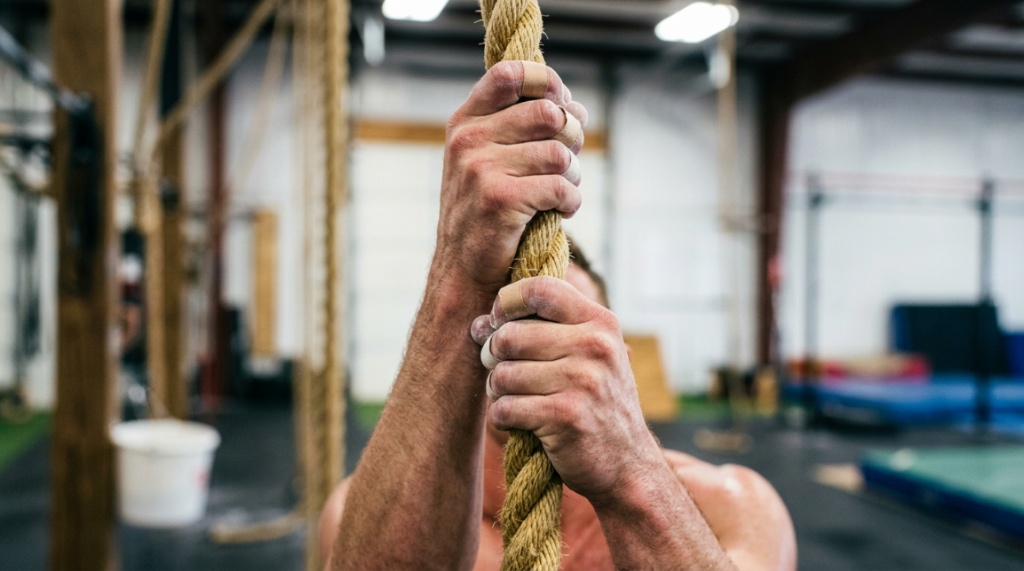
The fiber composition of your rope will define its grip, durability, and feel. In competitive gymnastics, the regulations are strict, but for general training, you have more flexibility. Here is how the primary materials stack up against the demands of Colorado’s environment.
Manila Rope
Manila is the traditional choice for competitive gymnastics. It has a natural, rough texture that provides exceptional grip, even when your hands are chalked. However, manila is a natural fiber. In Colorado’s dry climate, manila can become brittle and develop splinters that are painful and dangerous. It also has a lower breaking strength than synthetics and will degrade faster if left in a vehicle or outdoor shed during the freeze-thaw cycles of Colorado winters.
Nylon Rope
Nylon is the most common material for CrossFit and general fitness rope climbing. It handles dynamic loads very well, absorbing shock better than natural fibers. Nylon is also more resistant to abrasion and mildew than manila. The downside is that nylon is highly susceptible to UV degradation. A nylon rope used for outdoor gymnastics training in Colorado needs to be treated or coated to resist sunlight, or it will become crunchy and weak within a season.
Polyester Rope
Polyester is arguably the best material for the Colorado climate. It has superior UV resistance compared to nylon and does not absorb water easily. It dries quickly and maintains its flexibility in cold temperatures. While it might be slightly slicker than nylon or manila, modern double-braid polyester constructions offer a solid grip without the splintering risk. For outdoor setups or garages that fluctuate in temperature, polyester is the safest and longest-lasting option.
Rope Diameter and Length: Matching the Intended Use
Choosing the wrong diameter is the most common mistake athletes make. The feel of the rope in your hands is crucial for performing legless climbs or executing the “bird’s nest” technique used in competitive gymnastics.
Standard 1.5-Inch Rope
The standard gymnastics competition rope is 1.5 inches in diameter. This is the regulation size for USA Gymnastics (USAG) events. If you are a young gymnast or have smaller hands, this diameter provides a solid grip that allows for quick transitions and precise hand-over-hand movement. It is the recommended size for pure gymnastics drills.
Heavy-Duty 2-Inch Rope
Ropes measuring 2 inches in diameter are heavier and much more difficult to grip. These are primarily used in functional fitness gyms to build upper-body and grip strength. The increased mass provides a greater training stimulus, but it can also cause shoulder strain if you have not built up the requisite tendon strength. For general conditioning in Colorado, the 2-inch rope is excellent if your goal is strength, not competition skill.
Length Requirements
Most ropes are sold in 15-foot and 20-foot lengths. The length you need depends entirely on your ceiling height. In commercial gyms with 20-foot ceilings, a 15-foot rope is standard. However, in home garages in Colorado, you might have lower trusses. A rope that is too long will pool on the floor, creating a trip hazard and causing you to lose your rhythm. Measure the distance from your anchor point to the floor and subtract two feet to find the correct rope length.
Hardware and Mounting: Safety Considerations for High Ceilings
The rope itself is only half of the equation; the attachment system is critical for safety. In commercial settings, ropes are often tied off to a steel beam or secured with a heavy-duty carabiner. For home use, you need to ensure the eye bolt is rated for dynamic loads.
Swivel vs. Static Mounts
When comparing ropes, look at the top loop hardware. A good rope has a thimble or a protective sleeve where the rope meets the hardware to prevent friction wear. The mount itself should rotate. A static mount (non-swivel) causes the rope to twist as you climb, unraveling the strands over time and creating serious safety hazards. A swivel mount absorbs the rotation, extending the life of the rope and keeping your body a natural alignment during the climb.
Structural Rating
Do not mount a gymnastics rope to a drywall ceiling using a regular screw hook. The forces generated during a climb are not just vertical; they are dynamic and lateral. You need a rated anchor point, usually a 3/8-inch or 1/2-inch eye bolt threaded into a structural beam above the drywall. If your ceiling joists are not accessible, you will need to build a freestanding frame. This is especially important in Colorado, where snow loads on roofs can cause micro-flexing that loosens improper mounts.
Climate Adaptations: Moisture and Temperature Resistance
We touched on UV rays earlier, but temperature is another critical factor. Colorado experiences significant temperature swings, especially in the fall and spring when it can be 70°F in the afternoon and 30°F at night. If your climbing rope is in a non-insulated garage or outdoor pavilion, this thermal cycling causes materials to expand and contract. Natural fibers like manila will absorb any ambient moisture during snow melts, leading to freezing and cracking. Synthetic ropes, specifically marine-grade polypropylene, are much more stable in these conditions. They do not freeze solid, and they do not rot. Choosing a rope labeled “spliceable” or “marine-grade” often indicates it has additives for weather resistance that standard gym ropes lack.
Grip and Chalk Interaction
Colorado athletes often use liquid chalk more than gymnasts in humid states because the air wicks away natural skin moisture. The interaction between chalk and the rope material is a key comparison point. Chunky, high-pile ropes trap chalk dust, creating a gritty paste that can actually reduce friction after a few climbs. Tightly woven ropes allow the chalk to sit on the surface rather than sinking in. When comparing ropes, pay attention to the weave tightness. A tight braid will feel slicker initially but performs more consistently over time, whereas a loose braid feels grippy in the first week but loses its texture quickly as the fibers break down under dry conditions.
Breaking Strength and Safety Margins
You should never judge a rope solely by its “tested breaking strength” on a spec sheet. The working load limit is what matters. A rope rated for 2,500 pounds might have a working load of only 500 pounds. When you add the force of a 200-pound athlete doing dynamic kipping swings, the actual load can spike to nearly 1,000 pounds. For Colorado training where you might be using the rope multiple times a week, you should always choose a rope with a working load limit at least three times your body weight. This safety margin protects against weakened areas caused by sun exposure and abrasion, which are more likely in the high-altitude sun.
Cost vs. Longevity: The Real Value Equation
Cheap ropes are expensive in the long run. Buying a $40 polyester rope that needs replacing every six months is far more costly than buying a $120 UV-stabilized rope that lasts three years. However, you should also consider the cost of the installation hardware. A high-quality swivel mount and structural bolt will cost $30 to $60 on top of the rope price. When comparing options, calculate the “cost per season” instead of just the sticker price. A rope that survives the Colorado summer sun without cracking is worth the premium.
Frequently Asked Questions
Can I leave my gymnastics rope outside in Colorado?
It is not recommended. Even UV-stabilized ropes degrade faster when exposed to rain and snow. If you must leave it outside, choose a polyester rope with a protective sleeve and cover the top attachment, as water can pool in that area and freeze, damaging the fibers.
What is the best rope material for a home garage gym?
Polyester is the best material for garage gyms because it handles temperature fluctuations well and resists mildew. It dries quickly and maintains its flex in the winter, preventing the stiffness that makes nylon or manila difficult and dangerous to climb in cold weather.
At what age can a child start rope climbing?
Children can start climbing vertically around age 6, but they should use a 1.5-inch rope with a lower anchor point so they can touch the floor with their feet. Always use a crash mat underneath the rope, regardless of the child’s skill level, to account for sudden grip fatigue.
Do I need a special rope for high-altitude training?
You do not need a special altitude-specific rope, but you do need a rope with high UV resistance. The sun at high altitude is harsher, so standard ropes might degrade up to 50% faster. Look for ropes specifically labeled as UV-treated or marine-grade.
How often should I replace a climbing rope used for training?
For recreational training, inspect your rope every month. Replace it if you see any exposed core fibers, a fuzzy texture that looks like “fuzz,” or unusual kinking. For competition athletes, a rope should be replaced every season, as the grips and speed are heavily dependent on the surface texture.
Conclusion
Selecting the right rope for your gymnastics training in Colorado is a matter of balancing material durability, climate resistance, and hardware safety. You now have the knowledge to look beyond the surface and ask the right questions about UV treatment, working load limits, and swivel mechanics. Prioritize polyester or coated nylon for outdoor longevity, stick with a 1.5-inch diameter for competition standards, and never compromise on the integrity of your ceiling mount. Always inspect your rope for fraying and environmental damage, as the dry, sunny climate of Colorado can accelerate wear that would take much longer to appear in other regions. Make your choice based on your training environment, and you’ll be able to focus on your climbing performance rather than wondering if your equipment is going to fail mid-rep.